

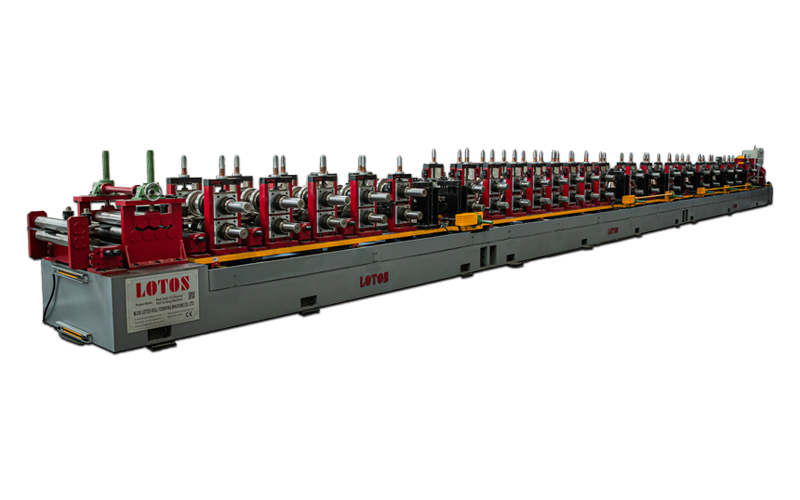
Precision Manufacturing for Modern Vehicles
The automotive industry demands manufacturing processes that deliver high strength, dimensional accuracy, and cost efficiency. One of the most reliable methods for producing long, uniform metal profiles is roll forming technology. This process plays a critical role in the production of structural and safety-related vehicle components used by global automotive manufacturers.
Roll Forming for Automotive Industry
Roll forming is a continuous cold forming method in which metal coils are gradually shaped into complex cross section profiles through a sequence of precision rollers. In automotive applications, this process is optimized for high volume production and strict quality requirements.
Common materials include carbon steel, galvanized steel, stainless steel, aluminum, and advanced high strength steel (AHSS), all of which are essential for achieving lightweight yet durable vehicle designs.
Automotive Components Manufactured by Roll Forming Technology
Roll formed profiles are widely used across vehicle structures due to their strength and repeatability. Typical automotive components include:
Door impact beams
Bumper reinforcement systems
Chassis and frame sections
Seat rails and seat frame components
Roof rails and side protection beams
Battery housing profiles for electric vehicles
Structural reinforcements and channels
These components require consistent mechanical performance, which roll forming reliably delivers.
Technical Advantages for Vehicle Manufacturing
Roll forming offers several engineering and production advantages for automotive use:
Dimensional Consistency
The gradual forming process ensures stable geometry and tight tolerances across long production runs.
Efficient Material Utilization
Minimal waste and optimized coil usage help reduce overall production costs.
High Production Output
Continuous operation allows for fast cycle times, making the process suitable for mass production environments.
Compatibility with High Strength Materials
Advanced steels and lightweight alloys can be processed without compromising structural integrity.
Inline Processing Capabilities
Punching, embossing, welding, and cut to length operations can be integrated directly into the production line.
Automotive Roll Forming Machines and Line Configuration
Production lines used for automotive profiles are engineered for precision, durability, and automation. A standard line configuration typically includes:
Heavy duty decoilers
Precision straightening and leveling units
Multi-stand forming mills
Servo controlled punching and cutting systems
Inline welding or assembly modules
Automated stacking and handling equipment
Modern PLC based control systems ensure stable operation, accurate monitoring, and consistent quality output.
Quality Standards and Compliance
Automotive roll formed components must meet strict international quality and safety standards. Production lines are commonly designed in accordance with ISO requirements and OEM specifications, ensuring dimensional accuracy, surface quality, and long term performance reliability.
Industry Trends and Future Developments
As vehicle designs evolve, roll forming solutions continue to advance. Key developments include:
Increased use of ultra high strength steel (UHSS)
Specialized profiles for electric and hybrid vehicles
Integration of smart sensors and Industry 4.0 systems
Energy efficient and low maintenance machine designs
These trends reinforce the importance of roll forming as a core technology in next generation automotive manufacturing.
Conclusion
Roll forming technology remains a vital manufacturing solution for producing durable, lightweight, and high precision automotive components. Its ability to support high strength materials, maintain production efficiency, and meet strict quality standards makes it indispensable for modern vehicle production. With advanced engineering expertise and customized solutions, LotosForming provides reliable roll forming systems tailored to the evolving needs of the global automotive industry.