

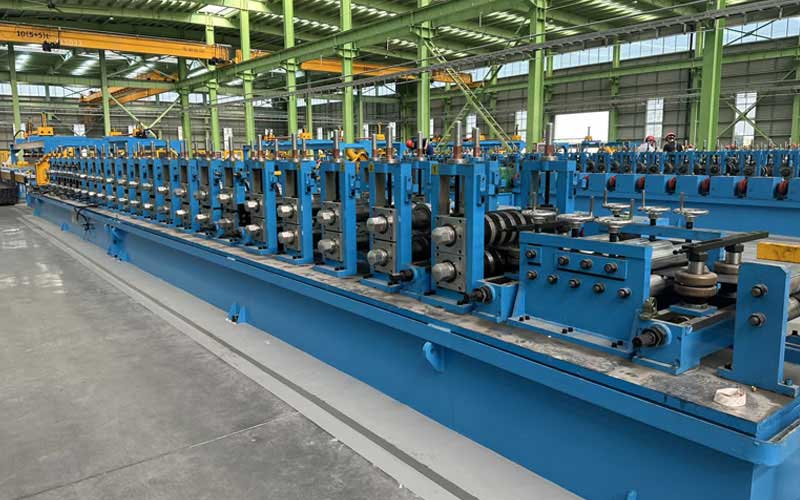
Metal Forming Machine
The manufacturing industry relies heavily on efficient and precise metal processing. Lotosforming recognizes this critical need and provides tailored solutions for material preparation, including the utilization of advanced metal making machines. This article offers a technical overview of these machines, examining key types, technological advancements, and their role in optimizing material properties for diverse applications.
Types of Metal Making Machines
Metal making machines encompass a broad spectrum of equipment designed to shape, process, and prepare metallic materials. The selection of the appropriate machine depends heavily on the material type, desired geometry, and production volume. Key types include:
- Rolling Machines: These machines reduce the thickness of metal sheets or coils by passing them between rollers. Variations include:
- Red Rolling Machines: Used for hot rolling of metals.
- Cold Rolling Machines: Used for cold rolling to improve surface finish and dimensional accuracy.
- Thickness Control Rolling Machines: Equipped with sophisticated sensors and control systems for precise thickness control.
- Forging Machines: Employ compressive forces to shape metal into desired forms. Common types include:
- Open Die Forging Machines: Utilize open dies to shape metal.
- Closed Die Forging Machines: Employ closed dies for intricate shaping and high-precision parts.
- Hydrostatic Forging Machines: Utilize hydraulic pressure for even force distribution, suitable for complex geometries.
- Extrusion Machines: Force metal through a die to create specific cross-sectional shapes, such as profiles, tubes, and rods. Types include:
- Direct Extrusion Machines: Directly push the metal through the die.
- Indirect Extrusion Machines: Utilize a ram to push a mandrel through the die.
- Press Brake Machines: Used for bending sheet metal into desired angles and shapes. They offer high precision and repeatability.
- Cutting Machines: These machines precisely cut metal sheets or bars using various techniques:
- Laser Cutting Machines: Employ laser beams for high-precision cutting.
- Plasma Cutting Machines: Use plasma arcs for cutting thicker metal.
- Shearing Machines: Utilize blades to shear sheet metal.
Technological Advancements in Metal Making Machines
Significant technological advancements are driving improved performance, efficiency, and precision in metal making machines:
- CNC (Computer Numerical Control) Systems: CNC control systems enable automated operation, precise positioning, and complex part geometries.
- Advanced Sensors and Feedback Systems: Real-time monitoring of process parameters (e.g., force, pressure, temperature) allows for dynamic adjustments and quality control.
- Artificial Intelligence (AI) and Machine Learning (ML): AI and ML algorithms are being applied for predictive maintenance, process optimization, and defect detection.
- Additive Manufacturing (3D Printing): While not a traditional “making” machine, additive manufacturing is increasingly used for creating complex metal parts with customized geometries.
- Advanced Material Handling Systems: Automated material handling systems improve efficiency and reduce labor costs in metal making operations.
Applications in Material Preparation for Lotosforming
Lotosforming leverages metal making machines for critical material preparation processes:
- Sheet Metal Forming: Preparing sheet metal for subsequent processes like slitting, cutting, or coating.
- Profile Extrusion: Creating custom profiles for various applications.
- Precision Component Manufacturing: Producing high precision metal components for specialized applications.
- Coating Preparation: Preparing the metal surface for coating application through processes like shot blasting or deburring.
Key Technical Specifications to Consider
When evaluating metal making machines, consider the following technical specifications:
- Material Capacity: The maximum weight or dimensions of the metal that the machine can process.
- Power Requirements: The electrical power requirements of the machine.
- Control System: The type and capabilities of the control system (e.g., CNC, PLC).
- Accuracy & Repeatability: The precision with which the machine can perform its operations.
- Maintenance Requirements: The frequency and complexity of maintenance tasks.
Conclusion
Metal making machines are essential for achieving desired material properties and dimensions in manufacturing processes. Staying abreast of technological advancements and selecting the appropriate machine for specific requirements are crucial for optimizing production efficiency and quality. Lotosforming is committed to providing innovative solutions and expert guidance to help our clients select and implement the right metal making machines for their needs.