

Pallet Flow Racking
Roller pallet racking is a high efficiency storage solution developed to improve warehouse space utilization, streamline pallet flow, and increase operational productivity. This gravity based storage system is widely used in logistics and industrial environments where fast stock rotation and reliable material handling are essential.
Operating Principle of Gravity Flow Pallet Systems
The system operates on a gravity flow principle, where pallets are loaded at the higher end of an inclined lane and move smoothly toward the discharge side. Controlled roller tracks guide pallet movement, enabling First In, First Out (FIFO) inventory management, which is critical for time-sensitive goods.
Structural Design and Key Components
1. Roller Tracks
High strength roller tracks are installed within each storage lane to support pallet loads and ensure smooth, controlled movement. Roller spacing and material selection depend on load capacity, pallet type, and operating conditions.
2. Rack Frames and Beams
The supporting structure consists of cold formed steel frames and beams engineered for high load bearing performance. These components are designed to withstand both static loads and dynamic forces generated during pallet movement.
3. Speed Control and Braking Devices
To regulate pallet velocity, brake rollers or speed controllers are integrated into the flow lanes. These devices reduce impact forces, protect goods, and enhance operational safety.
4. Safety and Pallet Control Elements
Pallet separators, end stops, and guide rails ensure controlled pallet release and prevent accidental discharge, contributing to a safe working environment.
Manufacturing Technology
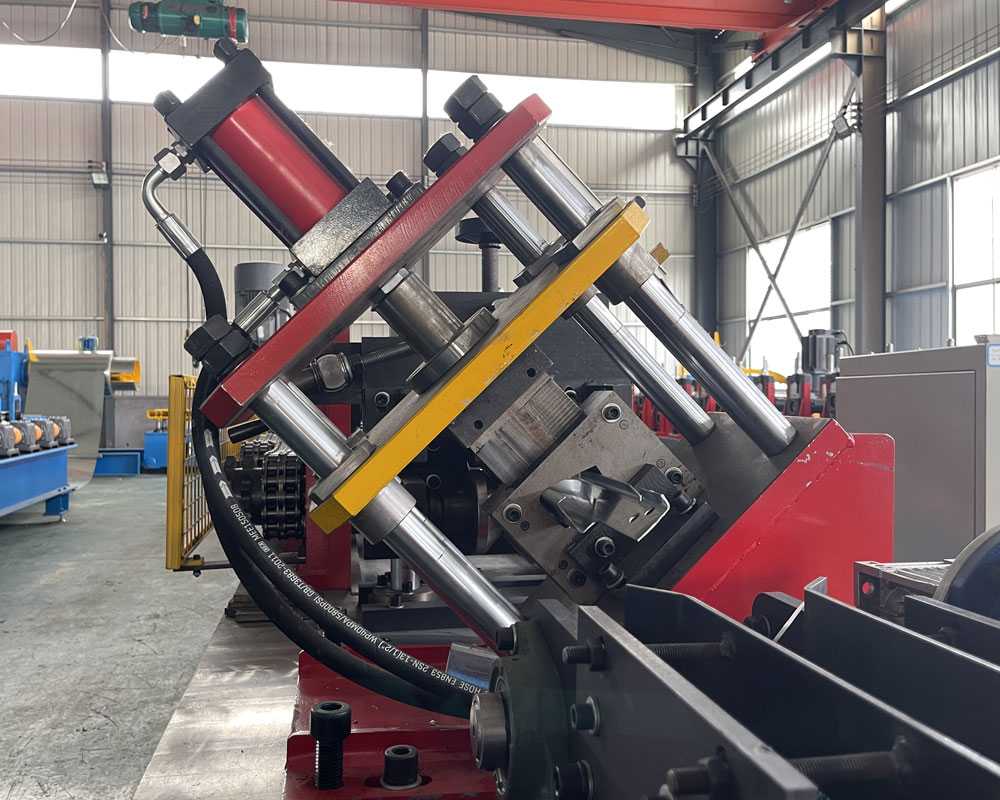
The production of gravity flow racking components relies on advanced roll forming technology. Roll forming enables the manufacture of long, uniform steel profiles with consistent geometry and mechanical strength. Precision punching and cutting operations ensure accurate assembly and reliable system performance.
Performance Advantages
High density storage with reduced aisle requirements
Efficient stock rotation through FIFO operation
Reduced handling time and increased throughput
Improved warehouse safety through controlled pallet movement
Long service life due to robust steel construction
Typical Applications
Gravity based pallet flow systems are widely applied in:
Distribution and logistics centers
Food and beverage warehouses
Pharmaceutical and healthcare storage
Cold storage and refrigerated facilities
Manufacturing plants with continuous material flow
Conclusion
Gravity flow pallet storage systems provide an effective solution for warehouses seeking higher efficiency, better inventory control, and optimized space utilization. By combining precision engineered steel structures with reliable roller technology, these systems deliver consistent performance in demanding industrial environments. With its expertise in roll forming solutions, Lotosforming supports manufacturers in producing durable and high quality components for modern pallet flow racking systems.
FAQ:
Pallets are loaded at the higher end of a racking lane and move forward using gravity.Speed controllers regulate movement to ensure smooth and safe pallet transfer, enabling First In, First Out (FIFO) stock rotation.
Key components include roller tracks, rack frames, load beams, brake rollers, pallet separators, and safety stops. Each element is engineered to support heavy loads while maintaining controlled pallet movement.
Yes, systems can be customized based on pallet size, load capacity, lane depth, and warehouse layout. Manufacturers design roller spacing and frame dimensions according to specific operational needs.
Advantages include higher storage density, improved inventory rotation, reduced handling time, better space utilization, and increased operational safety due to controlled pallet flow.