
Solar Structure Purlin
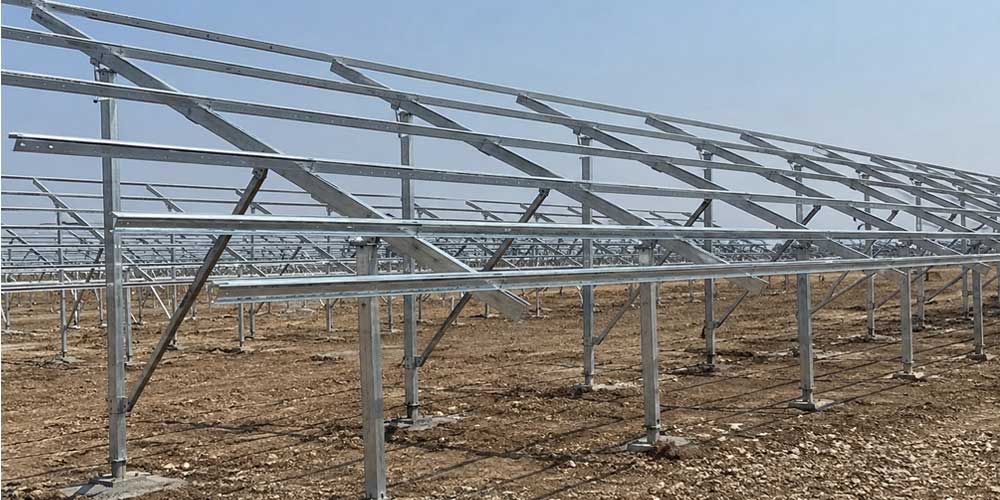
Purlins for solar panels play a critical role in photovoltaic (PV) mounting structures, serving as the primary load bearing members that support solar modules. In modern solar energy systems, especially ground mounted and rooftop installations, purlins ensure structural stability, accurate alignment, and long term durability under environmental loads such as wind, snow, and seismic forces. With the rapid expansion of solar energy projects worldwide, demand for high strength and precisely formed purlins has significantly increased.
What Is a Solar Purlin?
A solar purlin is a cold-formed steel structural member, typically manufactured in C-type, Z-type, or custom profiles, used to support solar panels and distribute loads evenly across the mounting structure. These components are installed between the main beams or frames of solar structures and serve as the direct support base for solar panel mounting rails or clamps.
In solar applications, purlins are engineered to maintain dimensional accuracy, resist corrosion, and withstand long term outdoor exposure without deformation.
Material Selection for Solar Purlins
The performance of solar purlins depends heavily on material selection. Common materials include:
- Hot-dip galvanized steel (HDG)
- Pre-galvanized steel (GI)
- High-strength low-alloy steel (HSLA)
Typical thickness ranges from 1.5 mm to 4.0 mm depending on structural requirements. For heavy duty solar farms and high wind zones, thicker and high tensile steel grades are preferred to ensure structural integrity.
Structural Requirements in Solar Applications
Solar purlins must meet strict engineering requirements due to continuous exposure to dynamic environmental loads. Key design considerations include:
- High load bearing capacity for solar panel weight
- Resistance to wind uplift forces
- Corrosion resistance for outdoor durability
- Dimensional precision for panel alignment
- Compatibility with various mounting systems
Proper design ensures minimal deflection and long-term stability of the entire solar array.
Manufacturing Process: Roll Forming Technology
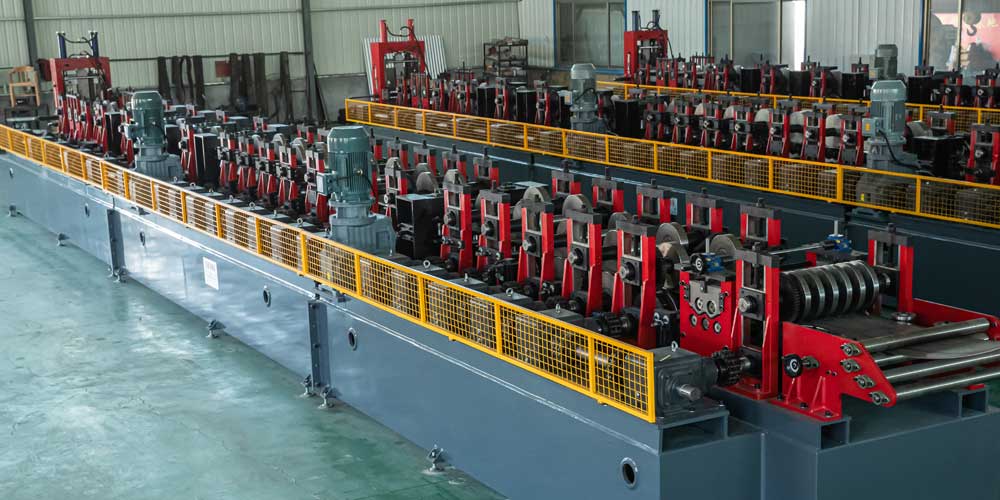
Most solar purlins are produced using advanced roll forming technology. This process ensures continuous production with high precision and consistency. The steel strip is gradually shaped through multiple roller stations until the final profile is achieved.
Modern production lines such as those developed by LOTOSFORMING can integrate the following features:
- Automatic uncoiling and leveling
- Servo-controlled feeding system
- Hydraulic or servo punching systems for mounting holes
- High speed roll forming sections
- Flying shear or hydraulic cutting systems
- PLC-based automation and control
This ensures high efficiency, minimal waste, and consistent product quality.
Advantages of Roll Formed Solar Purlins
Roll formed purlins offer several technical advantages over traditional structural methods:
- High production efficiency and low cost
- Excellent dimensional accuracy
- Lightweight yet high strength performance
- Reduced material waste
- Customizable profiles for different solar systems
- Suitable for large-scale solar farm production
Application in Solar Energy Systems
Solar purlins are widely used in:
- Ground-mounted solar power plants
- Rooftop photovoltaic systems
- Industrial solar installations
- Agricultural solar structures (agri-PV systems)
- Carport solar structures
They are essential in ensuring that solar panels remain securely fixed and optimally positioned for maximum energy efficiency.
Conclusion
The future of solar purlin manufacturing is driven by innovation in materials, automation, and precision engineering. As solar energy continues to grow globally, demand for high performance structural components will increase significantly.