
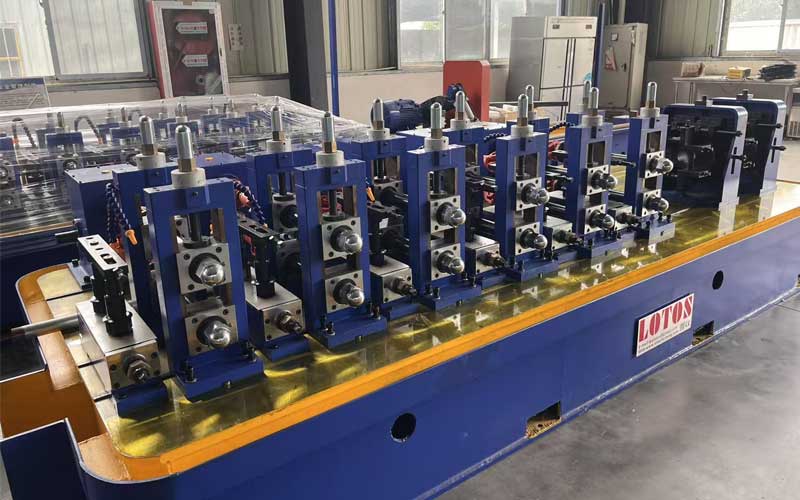
What is the Production Process of Tube Mill Machine?
The tube mill process is a highly efficient manufacturing method used to produce welded steel tubes and pipes from metal coils. Tube mills are essential equipment in industries such as construction, automotive, furniture, energy, agriculture, and infrastructure. Modern tube mill machines can produce high-quality tubes with excellent dimensional accuracy, high production speeds, and consistent weld quality.
Understanding the tube mill process helps manufacturers optimize production efficiency, improve product quality, and reduce operating costs.
What Is the Tube Mill Process?
The tube mill process is a continuous manufacturing operation that converts steel coils into round, square, rectangular, or customized steel tubes. The process involves a series of forming, welding, sizing, and cutting operations that transform flat steel strip into finished tubular products.
A tube mill production line is designed to operate continuously, enabling large scale production with minimal material waste and high productivity.
The process is widely used for manufacturing:
- Structural steel tubes
- Mechanical tubing
- Furniture tubes
- Automotive tubes
- Water and gas pipes
- Construction hollow sections
- Greenhouse tubing
- Solar structure tubing
Main Components of a Tube Mill Machine
A complete tube mill line typically consists of:
1. Uncoiler
The uncoiler holds the steel coil and feeds the strip into the production line. Hydraulic or automatic uncoilers are commonly used for high speed operation.
2. Strip Accumulator
The accumulator stores strip material temporarily, allowing continuous production during coil changes without stopping the tube mill.
3. Forming Section
The forming section gradually bends the flat steel strip into a tubular shape using multiple roll forming stations.
4. High Frequency Welding Unit
The open edges of the formed tube are heated and welded together using high frequency induction welding technology.
5. Sizing Section
After welding, the tube passes through sizing rolls that achieve precise dimensions and improve surface quality.
6. Flying Cut Off Machine
The cut off system cuts the continuous tube into specified lengths without stopping the production line.
7. Run Out Table and Packing System
Finished tubes are collected, inspected, bundled, and prepared for storage or shipment.
What Is the Production Process of a Tube Mill Machine?
The production process of a tube mill machine follows a series of carefully controlled steps.
Step 1: Coil Loading
Steel coils are loaded onto the uncoiler. The strip is unwound and fed into the tube mill line.
Step 2: Strip Preparation
The leading edge of the strip is straightened and guided into the forming section. Edge preparation ensures proper welding quality.
Step 3: Roll Forming
The flat strip passes through multiple forming stands. Each roll station gradually bends the strip until it forms a round tube shape with open edges.
Step 4: High Frequency Welding
High frequency current is applied to the tube edges. The generated heat creates a forge weld that joins the edges together.
Benefits of high frequency welding include:
- Strong weld seams
- High production speed
- Low energy consumption
- Excellent product consistency
Step 5: Weld Bead Removal
The external weld bead is removed to achieve a smooth tube surface and improve product appearance.
Step 6: Tube Sizing
The welded tube enters the sizing section, where precision rolls calibrate the final outside diameter and shape.
At this stage, round tubes can also be converted into:
- Square tubes
- Rectangular tubes
- Oval tubes
- Special profile sections
Step 7: Tube Cutting
A flying saw or cold saw cuts the continuously moving tube into predetermined lengths without interrupting production.
Step 8: Inspection and Packaging
Finished tubes undergo quality inspections including:
- Dimensional measurement
- Weld seam inspection
- Surface quality checks
- Straightness verification
Qualified products are bundled and packaged for delivery.
Advantages of Modern Tube Mill Machines
Modern tube mills offer several advantages:
High Production Efficiency
Advanced tube mills can operate at speeds exceeding 120 meters per minute, depending on tube dimensions and material thickness.
Superior Weld Quality
High frequency welding technology provides strong and reliable weld seams suitable for demanding industrial applications.
Flexible Production
A single tube mill can produce various tube sizes and shapes through roll changes and machine adjustments.
Cost-Effective Manufacturing
Continuous production minimizes labor requirements and material waste, reducing overall manufacturing costs.
Excellent Dimensional Accuracy
Modern control systems ensure consistent tube dimensions and stable product quality.
Applications of Tube Mill Products
Tube mill machines produce tubing for a wide range of industries:
Construction Industry
- Structural tubing
- Scaffolding pipes
- Building frameworks
- Steel fences
Automotive Industry
- Chassis components
- Exhaust systems
- Seat structures
Furniture Manufacturing
- Office furniture
- Metal shelving
- Storage racks
Energy and Infrastructure
- Pipeline systems
- Solar mounting structures
- Utility poles
Agricultural Equipment
- Greenhouse structures
- Irrigation systems
- Farm machinery
Factors Affecting Tube Mill Performance
Several factors influence tube mill productivity and product quality:
- Steel strip quality
- Roll tooling design
- Welding power stability
- Machine alignment accuracy
- Operator experience
- Maintenance practices
Regular maintenance and proper machine setup are essential for maximizing efficiency and extending equipment life.
Why Choose a High Quality Tube Mill Machine?
Investing in a high performance tube mill machine provides long term benefits including increased production capacity, improved product consistency, reduced downtime, and lower operating costs.
Manufacturers seeking competitive advantages in tube production should prioritize advanced automation, precision roll forming technology, and reliable high-frequency welding systems.
Conclusion
The tube mill process is a highly efficient manufacturing method that transforms steel coils into high-quality welded tubes through forming, welding, sizing, and cutting operations. Modern tube mill machines combine precision engineering, automation, and high frequency welding technology to deliver excellent productivity and consistent product quality.
As demand for steel tubing continues to grow across construction, automotive, infrastructure, and manufacturing sectors, advanced tube mill production lines remain a critical investment for companies seeking efficient and reliable tube manufacturing solutions.