
What are Furring Channels?
Furring hat channels are essential components in modern construction, providing a reliable framework for walls, ceilings, and cladding systems. Their lightweight design, excellent strength-to-weight ratio, and ease of installation make them widely used in both residential and commercial projects.
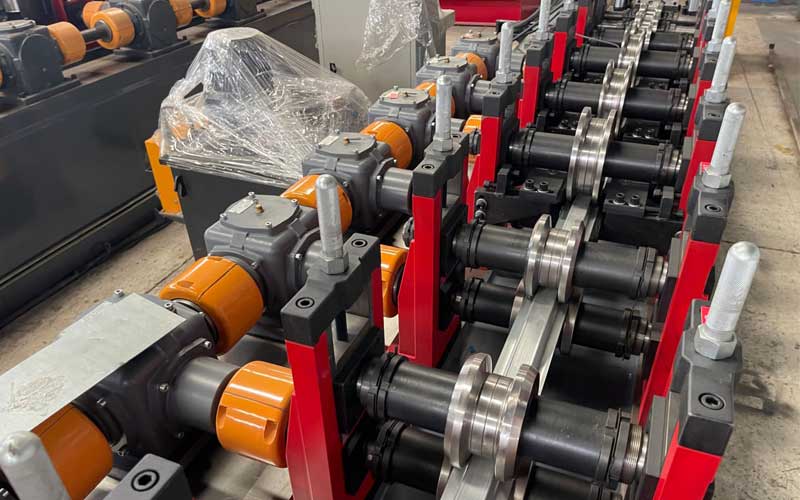
As demand for efficient steel framing continues to grow, manufacturers increasingly rely on Hat Channel Roll Forming Machines to produce high-quality profiles with consistent dimensions and high production efficiency.
This guide explains what a furring hat channel is, its applications, advantages, manufacturing process, and how roll forming technology ensures precision production.
What Is a Furring Hat Channel?
A Furring Hat Channel is a cold-formed steel profile with a shape resembling a hat when viewed in cross-section. It is primarily used to create a level mounting surface for drywall, gypsum board, metal panels, and other finishing materials.
The channel creates a space between the structural wall or ceiling and the finishing material, allowing room for insulation, wiring, plumbing, and ventilation systems.
Because of its strength, corrosion resistance, and dimensional accuracy, the furring hat channel has become a standard framing component in modern construction.
Main Applications of Furring Hat Channels
Furring hat channels are used in numerous construction projects, including:
- Interior drywall partition systems
- Suspended ceiling systems
- Exterior wall cladding
- Steel frame buildings
- Commercial office buildings
- Residential housing
- Industrial facilities
- Hotels and hospitals
- Educational buildings
- Renovation projects
They provide a stable support system while improving installation speed and structural alignment.
Advantages of Furring Hat Channels
Using steel furring hat channels offers several important benefits.
Lightweight Construction
Steel channels reduce the overall structural weight without compromising strength.
High Strength
Cold-formed steel provides excellent load-bearing performance for wall and ceiling systems.
Corrosion Resistance
Galvanized steel protects the channel from rust, making it suitable for humid environments.
Easy Installation
Uniform dimensions simplify installation and reduce labor costs.
Fire Resistance
Unlike wood framing, steel does not burn or contribute to fire spread.
Long Service Life
Galvanized steel channels maintain their performance for many years with minimal maintenance.
Excellent Dimensional Accuracy
Roll formed profiles ensure consistent quality throughout large production batches.
Materials Used
Most furring hat channels are manufactured from:
- Hot-dip galvanized steel
- Pre-galvanized steel
- Galvalume steel
- Cold rolled steel
- Pre-painted steel (special applications)
Galvanized steel is the preferred material because it combines strength with long-term corrosion protection.
How Is a Furring Hat Channel Manufactured?
Modern production relies on continuous roll forming technology.
The manufacturing process generally includes:
- Steel Coil Loading
- Decoiling
- Feeding and Leveling
- Roll Forming
- Punching (if required)
- Hydraulic Flying Cutting
- Automatic Stacking
- Packaging
The entire process is automated, enabling continuous, high-speed production with minimal material waste.
The Role of a Hat Channel Roll Forming Machine
A Hat Channel Roll Forming Machine transforms flat steel coils into finished hat channel profiles through multiple forming stations.
The machine ensures:
- High production speed
- Consistent profile dimensions
- Excellent surface quality
- Accurate cutting length
- Low production cost
- Continuous automated operation
Advanced production lines also include servo feeding, PLC control, automatic stacking, and quick size adjustment.
Key Components of a Hat Channel Roll Forming Line
A complete production line typically consists of:
- Hydraulic Decoiler
- Coil Feeding System
- Precision Leveling Machine
- Roll Forming Mill
- Hydraulic or Servo Punching Unit
- Flying Hydraulic Cutting System
- PLC Control System
- Automatic Stacker
Each component contributes to maintaining high production efficiency and product quality.
Why Roll Forming Is the Preferred Manufacturing Method
Compared with conventional fabrication methods, roll forming offers several advantages.
Higher Productivity
Continuous production significantly increases output.
Superior Accuracy
Multiple forming stations maintain precise dimensions.
Lower Material Waste
Continuous processing optimizes steel utilization.
Lower Labor Costs
Automation minimizes manual intervention.
Consistent Product Quality
Every profile is produced with identical dimensions and surface finish.
Industries That Use Furring Hat Channels
Furring hat channels are widely used across multiple industries.
These include:
- Construction companies
- Drywall contractors
- Ceiling system manufacturers
- Steel framing manufacturers
- Modular building manufacturers
- Infrastructure projects
- Industrial construction
- Commercial real estate developments
Choosing the Right Hat Channel Roll Forming Machine
Before investing in production equipment, manufacturers should consider:
- Material thickness range
- Profile dimensions
- Production speed
- Punching requirements
- Cutting accuracy
- PLC automation level
- Machine durability
- After-sales technical support
- Spare parts availability
Selecting the right equipment improves production efficiency and reduces operating costs.
Future Trends in Furring Hat Channel Manufacturing
As construction technology evolves, manufacturers are adopting:
- Fully automatic roll forming lines
- Servo controlled punching systems
- Intelligent PLC production management
- Remote monitoring
- Quick change tooling systems
- Energy-efficient production equipment
These innovations improve productivity while maintaining high product quality.
Conclusion
Furring hat channels play a vital role in modern wall and ceiling construction by providing a lightweight, durable, and corrosion-resistant framing solution. Their versatility makes them suitable for residential, commercial, and industrial applications.
With the use of advanced Hat Channel Roll Forming Machines, manufacturers can produce precise, high quality profiles efficiently and consistently. Investing in modern roll forming technology helps improve productivity, reduce waste, and meet the growing demand for steel framing systems in the global construction industry.
FAQ :
They are produced using a roll forming machine, where galvanized steel coils pass through multiple precision roller stations that gradually shape the steel into the required hat profile. The process may also include punching, cutting, and automatic length control.
Yes. Modern roll forming machines can be designed with adjustable tooling or quick change systems to manufacture multiple hat channel profiles with minimal downtime.
A furring hat channel is a lightweight cold-formed steel profile with a cross-section that resembles a hat. It is commonly used to create a level surface for attaching drywall, gypsum board, ceilings, and wall panels while providing a gap between the structural wall and the finishing material.
Yes. Manufacturers can customize the machine according to the required profile dimensions, steel thickness, punching patterns, production speed, and automation level to meet specific project or market requirements.