
Light Steel Frame (LSF)
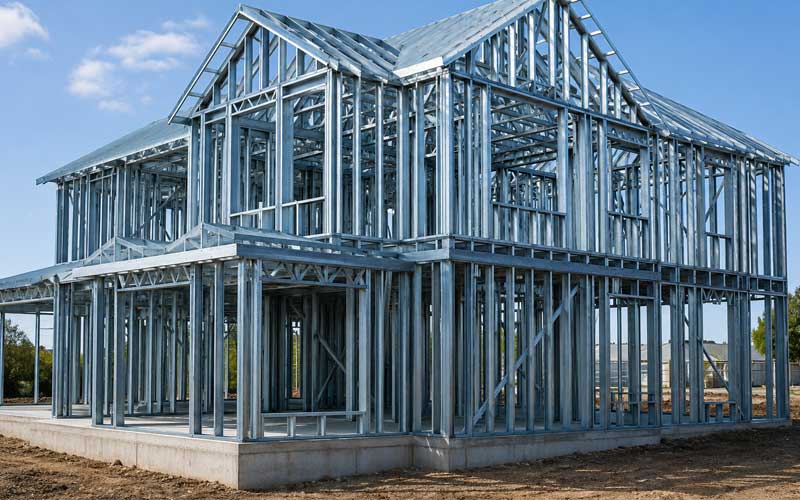
Light Steel Frame (LSF) construction is a modern building method that uses cold formed galvanized steel sections as the primary structural framework. Compared to traditional concrete and timber construction, LSF offers faster installation, higher dimensional accuracy, improved durability, and greater design flexibility.
As the demand for sustainable and efficient construction continues to grow, Light Steel Frame systems have become increasingly popular for residential buildings, commercial projects, modular homes, schools, hotels, and prefabricated structures worldwide.
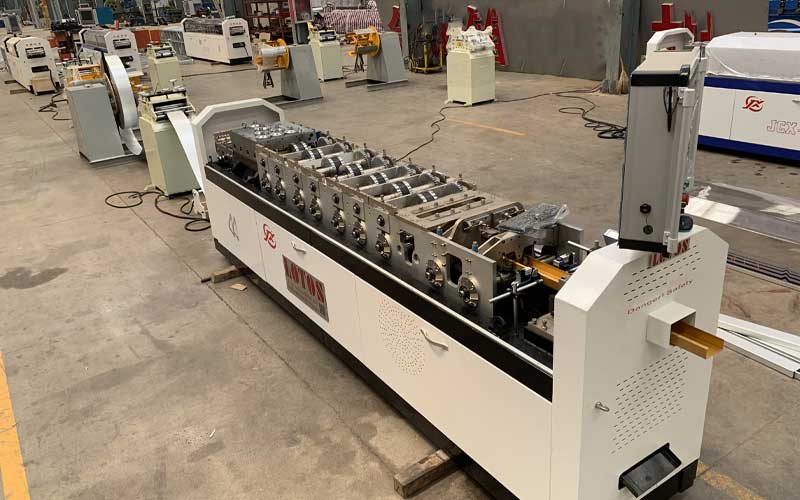
For manufacturers and contractors, high quality Light Steel Frame Roll Forming Machines play a crucial role in producing precise steel studs and tracks that meet international construction standards.
Understanding Light Steel Frame (LSF) Construction
Light Steel Frame construction consists of thin gauge galvanized steel members that are cold formed into structural profiles. These components are manufactured with high precision and assembled together to create walls, floors, ceilings, and roof systems.
Unlike hot rolled structural steel used in high-rise buildings, LSF utilizes lightweight steel sections that are easy to transport, fabricate, and install.
The complete building framework is typically manufactured off-site using automated roll forming equipment before being assembled on the construction site.
Main Components of an LSF Building
An LSF structure consists of several engineered steel components.
Steel Studs
Vertical framing members that support wall loads.
Steel Tracks
Horizontal members installed at the top and bottom of walls.
Floor Joists
Support floor systems while reducing structural weight.
Roof Trusses
Provide strong and lightweight roof support.
Bracing Members
Improve structural stability against wind and seismic forces.
Fasteners
Self-drilling screws securely connect all steel members.
How Light Steel Frame Construction Works
The LSF construction process follows several key steps.
1. Structural Design
Engineers design the building using CAD and structural analysis software.
2. Roll Forming Production
Galvanized steel coils are fed into a Light Steel Frame Roll Forming Machine, where they are formed into precise profiles.
Operations may include:
- Roll forming
- Servo feeding
- Hydraulic punching
- Marking
- Cutting to length
- Automatic stacking
3. Panel Assembly
Steel components are assembled into wall panels and roof trusses.
4. Transportation
Prefabricated panels are transported to the construction site.
5. Building Installation
The structure is assembled rapidly using mechanical fasteners without welding.
Materials Used in LSF Construction
High-quality materials ensure long service life.
Typical specifications include:
- Galvanized steel
- G550 high-strength steel
- Zinc coating (Z120–Z275)
- Thickness from 0.55 mm to 2.5 mm
- High corrosion resistance
- Excellent dimensional stability
Advantages of Light Steel Frame Construction
Faster Construction
Most components are manufactured before arriving on-site, significantly reducing construction time.
High Precision
Computer controlled roll forming machines produce highly accurate profiles with consistent dimensions.
Lightweight Structure
Steel framing weighs considerably less than concrete, reducing foundation requirements.
Excellent Strength
LSF offers an outstanding strength-to-weight ratio.
Earthquake Resistance
The lightweight structure reduces seismic loads and performs well in earthquake-prone regions.
Fire Resistance
Steel is non-combustible and does not contribute to fire spread.
Corrosion Protection
Galvanized coatings provide long-term protection against rust.
Sustainable Construction
Steel is 100% recyclable, making LSF an environmentally friendly building solution.
Applications of Light Steel Frame Construction
LSF technology is widely used across numerous industries.
Common applications include:
- Residential homes
- Apartment buildings
- Modular housing
- Villas
- Schools
- Hospitals
- Office buildings
- Hotels
- Temporary accommodation
- Commercial buildings
- Warehouses
- Industrial offices
- Worker camps
- Disaster relief housing
Why Roll Forming is Essential for LSF Production
Modern LSF production depends on advanced roll forming technology.
A Light Steel Frame Roll Forming Machine provides:
- High production speed
- Fully automatic operation
- Accurate punching positions
- Consistent profile dimensions
- Low material waste
- Flexible profile production
- Quick profile changeover
- Continuous manufacturing
Automation greatly improves productivity while maintaining product quality.
Key Features of an LSF Roll Forming Machine
Professional manufacturers typically offer machines equipped with:
- Automatic decoiler
- Precision leveling system
- Servo feeding
- Hydraulic punching station
- Multiple roll forming stations
- PLC control system
- Touch-screen interface
- Flying hydraulic cutting
- Automatic stacking system
These features enable continuous production with minimal manual intervention.
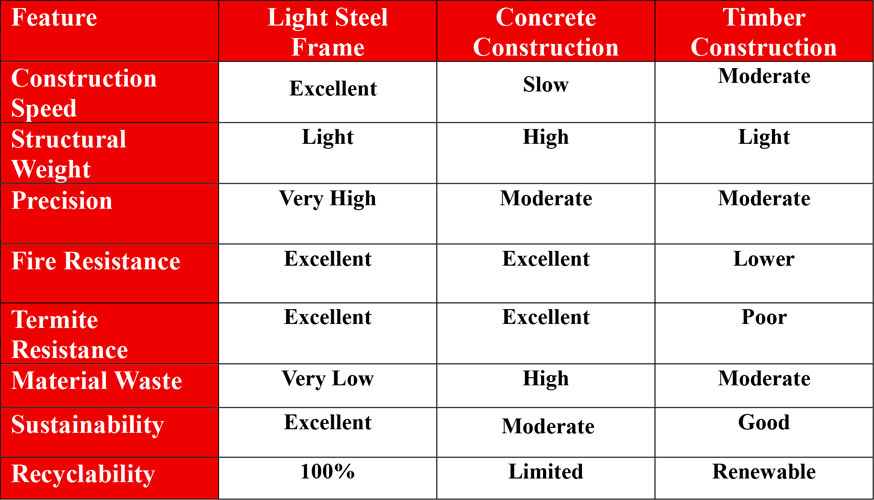
LSF vs Traditional Construction
Factors to Consider When Choosing an LSF Roll Forming Machine
When investing in manufacturing equipment, consider:
- Steel thickness range
- Profile compatibility
- Production speed
- Punching accuracy
- Cutting precision
- Automation level
- PLC control system
- Ease of maintenance
- Technical support
- Spare parts availability
- Machine durability
Selecting the right machine ensures stable production and long-term profitability.
Why Choose LOTOSFORMING for Light Steel Frame Roll Forming Machines?
LOTOSFORMING manufactures advanced Light Steel Frame Roll Forming Machines designed for high-speed, precision production of steel framing components.
Our machines offer:
- High-precision roll forming
- Fully automated production
- Servo-controlled feeding
- Accurate hydraulic punching
- Stable cutting performance
- Durable machine structure
- Custom profile solutions
- Easy operation with PLC control
- Comprehensive technical support
- Global installation and after-sales service
With years of experience in roll forming technology, LOTOSFORMING supplies reliable equipment to customers worldwide for efficient and cost-effective LSF manufacturing.
Future Trends in Light Steel Frame Construction
The popularity of Light Steel Frame construction continues to grow due to increasing demand for:
- Prefabricated buildings
- Modular construction
- Sustainable building practices
- Faster project delivery
- Smart manufacturing
- Building Information Modeling (BIM)
- Automated roll forming systems
- Energy-efficient buildings
As automation and digital manufacturing evolve, LSF construction is expected to become one of the leading building technologies for residential and commercial projects.
Conclusion
Light Steel Frame (LSF) construction is transforming the modern building industry by combining strength, speed, precision, and sustainability. Using cold formed galvanized steel profiles manufactured with advanced roll forming technology, LSF systems provide a reliable alternative to conventional construction methods.
For manufacturers, builders, and developers, investing in a high quality Light Steel Frame Roll Forming Machine ensures consistent production, superior profile accuracy, and increased operational efficiency. As global demand for prefabricated and energy-efficient buildings continues to rise, LSF construction will remain a key solution for the future of the construction industry.
FAQ:
LSF offers fast installation, lightweight structures, high strength, fire resistance, corrosion protection, dimensional accuracy, reduced material waste, and excellent sustainability.
It is an automated production line that transforms galvanized steel coils into precise LSF profiles such as C studs, U tracks, floor joists, and other framing components through roll forming, punching, and cutting operations.
Yes. Steel is fully recyclable, and LSF construction minimizes material waste, supports energy-efficient building designs, and reduces the environmental impact of construction.
LSF is widely used for homes, apartments, hotels, schools, hospitals, modular buildings, office spaces, warehouses, and prefabricated construction projects.