
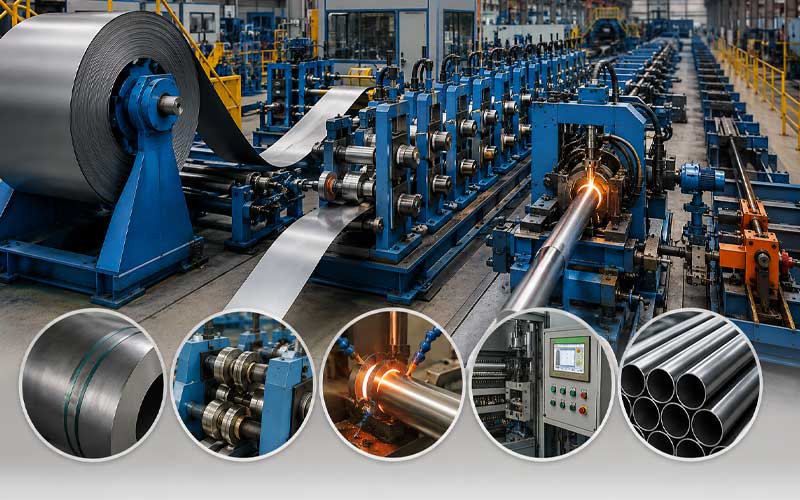
What is the Tube Mill Process?
Tube mill line speed is one of the most important indicators of productivity in steel pipe manufacturing. Higher line speeds can significantly increase output and reduce production costs, but speed must always be balanced with product quality and equipment reliability.
Many manufacturers focus solely on increasing speed, but understanding the factors that affect tube mill line speed is essential for achieving efficient and stable production. This article explores the key variables that influence tube mill performance and how manufacturers can optimize their operations.
Understanding Tube Mill Line Speed
Tube mill line speed refers to the rate at which steel strip passes through the forming, welding, sizing, and cutting sections of a tube mill. It is typically measured in meters per minute (m/min).
The maximum achievable speed depends on the machine design, material characteristics, pipe dimensions, welding technology, and automation level.
1. Steel Material Properties
The type and quality of steel being processed have a direct impact on production speed.
Factors include:
- Yield strength
- Tensile strength
- Surface quality
- Material hardness
- Strip flatness
High strength steel grades require greater forming forces and more precise control, often reducing the maximum production speed. In contrast, mild steel materials can generally be processed at higher speeds.
2.Tube Diameter and Wall Thickness
Pipe dimensions are among the most significant factors affecting line speed.
Larger Diameter Tubes
Larger pipes require more forming energy and greater welding control, which may reduce production speed.
Thicker Wall Tubes
As wall thickness increases, forming loads and welding requirements become more demanding. Heavy wall tubes often run at slower speeds to ensure proper weld penetration and dimensional accuracy.
3. Quality of Steel Strip Preparation
A well prepared steel coil improves production efficiency.
Important factors include:
- Consistent strip width
- Accurate slitting quality
- Burr free edges
- Proper coil alignment
Poor strip preparation can lead to welding defects, tracking issues, and frequent line stoppages.
4. Forming Roll Design
Roll tooling design plays a critical role in determining production speed.
High quality roll sets provide:
- Smooth strip transition
- Reduced forming stress
- Better dimensional control
- Improved product consistency
Optimized roll design minimizes deformation resistance and allows the mill to operate at higher speeds.
5. Welding Technology
The welding section is often the limiting factor in tube mill productivity.
Modern tube mills commonly use:
- High Frequency (HF) Welding
- Solid State HF Welding
- Induction Welding Systems
Advanced welding systems provide stable heat input and superior weld quality, allowing manufacturers to increase line speed without compromising product integrity.
6. Accumulator Capacity
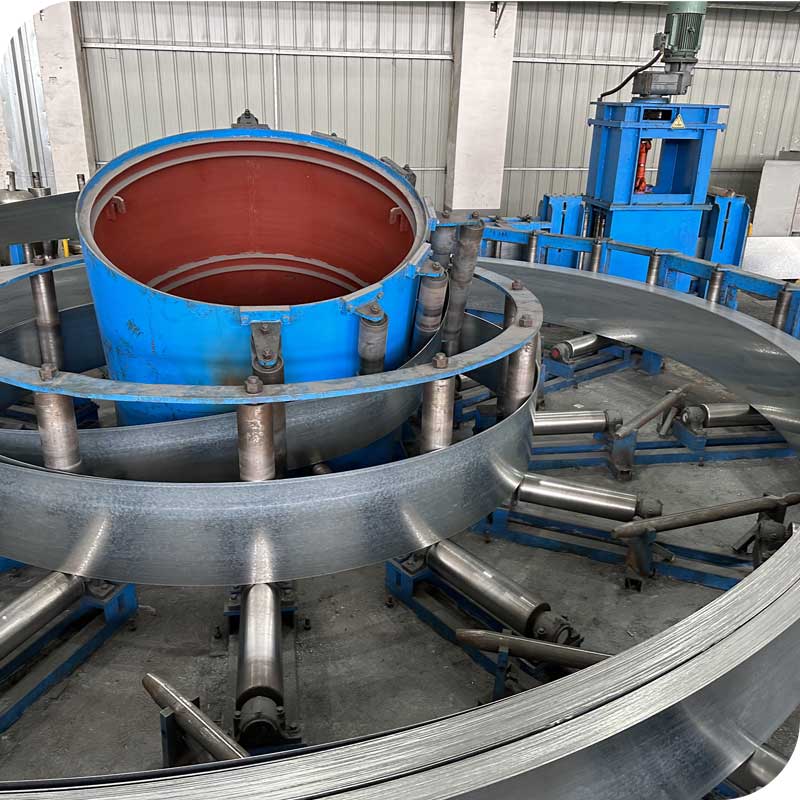
The strip accumulator ensures continuous production while changing steel coils.
A properly designed accumulator:
- Maintains uninterrupted strip feeding
- Reduces downtime
- Supports higher production speeds
Insufficient accumulator capacity can force operators to slow down the line during coil transitions.
7. Flying Cut Off System Performance
The cut off unit must synchronize with the tube speed.
Modern servo flying cut-off systems offer:
- High speed operation
- Precise length control
- Minimal production interruption
Outdated cutting systems often become bottlenecks that limit overall line speed.
8. Automation and Control Systems
Advanced automation significantly improves tube mill efficiency.
Modern control systems provide:
- Automatic speed adjustment
- Real time monitoring
- Fault detection
- Process optimization
PLC and servo driven systems allow manufacturers to operate safely at higher production rates while maintaining product quality.
9. Equipment Precision and Machine Stability
Machine rigidity and manufacturing precision directly affect speed capability.
High quality tube mills feature:
- Precision-machined stands
- Stable drive systems
- Accurate shaft alignment
- Heavy-duty construction
A stable machine structure minimizes vibration and maintains product consistency at high speeds.
10. Operator Experience
Even the most advanced tube mill requires skilled operators.
Experienced operators can:
- Optimize machine settings
- Quickly resolve issues
- Reduce scrap rates
- Maintain consistent production
Training and operational expertise remain essential for maximizing line performance.
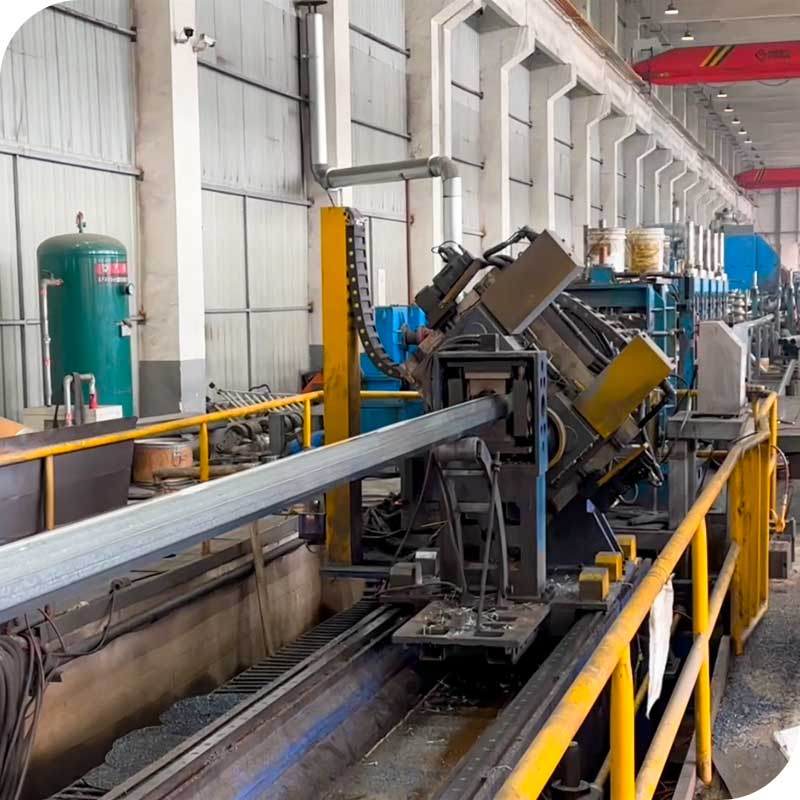
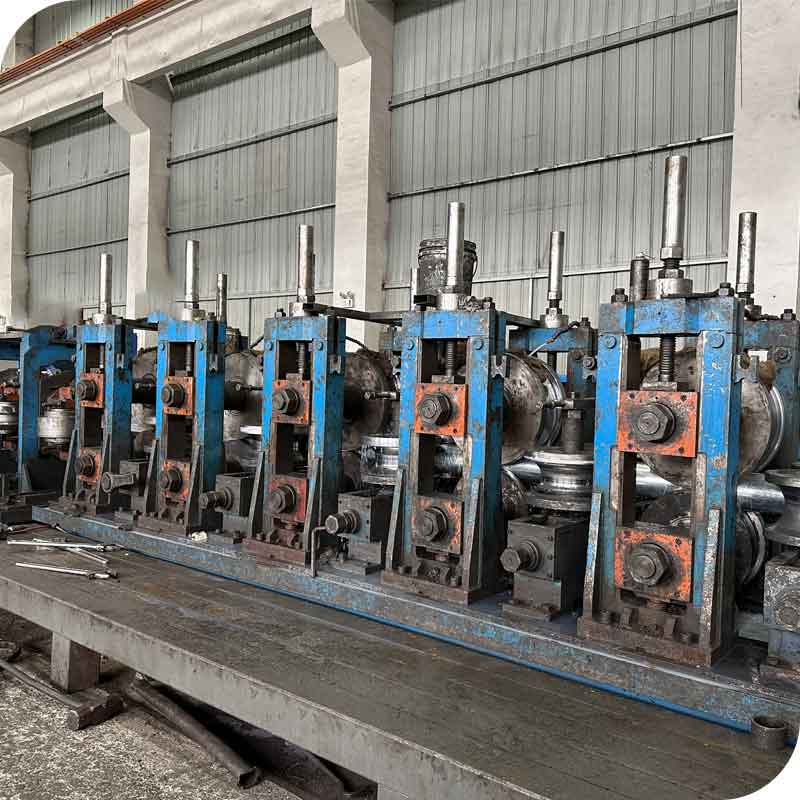
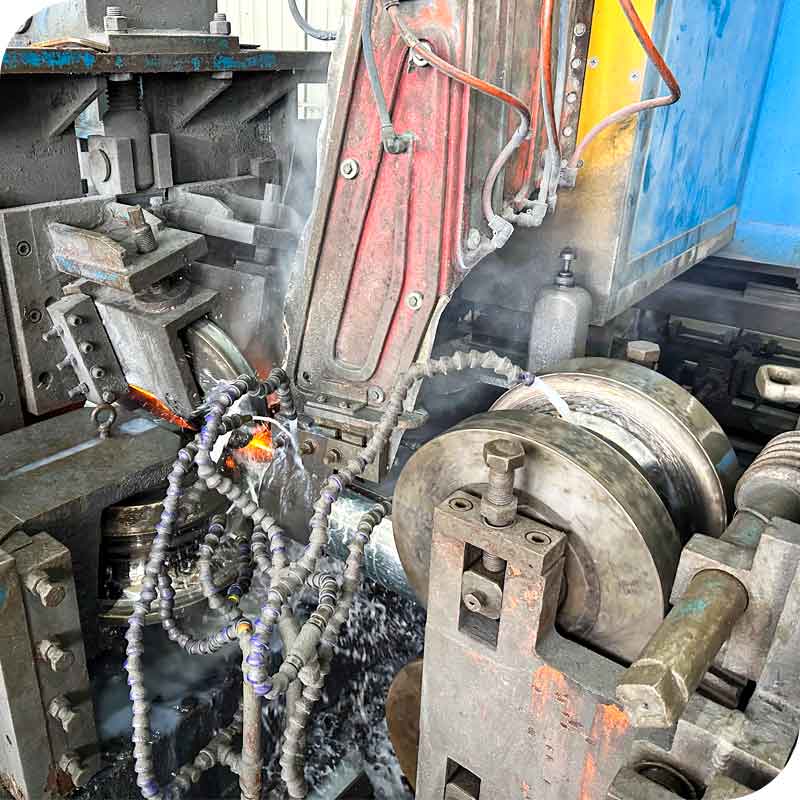
How to Increase Tube Mill Line Speed
Manufacturers seeking higher productivity should focus on:
- Using high quality slit coils
- Upgrading welding systems
- Implementing servo flying cut off technology
- Optimizing roll tooling design
- Enhancing automation systems
- Performing preventive maintenance
- Training operators regularly
These improvements can increase production efficiency while maintaining high product quality.
Why Choose LOTOSFORMING Tube Mills?
LOTOSFORMING provides advanced tube mill production lines designed for high speed, reliable operation. Our solutions feature precision roll forming technology, modern HF welding systems, intelligent automation, and robust machine construction.
Whether producing construction tubes, furniture pipes, mechanical tubing, or structural steel products, LOTOSFORMING tube mills are engineered to deliver excellent speed, accuracy, and long-term performance.
Conclusion
Multiple factors, including material properties, pipe dimensions, welding technology, roll design, automation systems, and machine quality influence tube mill line speed. Manufacturers who understand and optimize these variables can significantly improve productivity while maintaining consistent product quality.
FAQ:
Yes. Thicker steel requires greater forming force and welding energy, which generally reduces the maximum operating speed of the tube mill line.
Poor strip quality, uneven width, edge burrs, and coil defects can cause welding problems, tube deformation, and production stoppages, reducing overall line efficiency.
Manufacturers can improve speed by using high-quality slit coils, upgrading welding systems, optimizing roll design, implementing automation, performing regular maintenance, and training operators.
Tube mill speeds vary depending on pipe size and material, ranging from approximately 20 m/min for heavy-wall tubes to over 120 m/min for small-diameter, thin-wall tube production.