
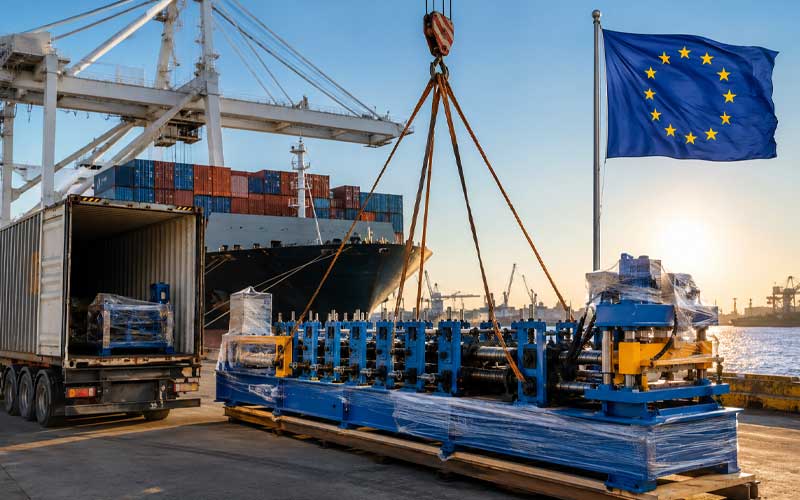
A Complete Guide for Manufacturers and Buyers
The European market is one of the largest consumers of roll forming machines due to the continuous demand for steel structures, solar mounting systems, roofing panels, drywall framing, automotive components, and industrial profiles. As infrastructure projects and sustainable construction continue to grow across Europe, importing high-quality roll forming equipment from experienced manufacturers has become increasingly common.
For manufacturers such as LOTOSFORMING, exporting roll forming machines to Europe requires more than producing reliable equipment. It also involves meeting European regulations, preparing proper documentation, ensuring safe transportation, and providing professional after-sales support.
This guide explains everything you need to know about exporting roll forming machines to Europe.
Why Europe Is a Key Market for Roll Forming Machines
European manufacturers require precision, automation, and long-term reliability. Roll forming technology is widely used in industries including:
- Construction and light gauge steel framing
- Solar mounting structure production
- Roofing and wall cladding
- Highway guardrail manufacturing
- Cable tray production
- Storage rack systems
- Automotive components
- Industrial steel profiles
Many European companies prefer importing customized production lines because they offer higher productivity and lower manufacturing costs.
European Standards for Roll Forming Machines
Before a roll forming machine enters the European Union, it must comply with applicable EU regulations.
Important considerations include:
- Machine safety
- Electrical safety
- Emergency stop systems
- Protective guarding
- Risk assessment
- Operator safety
- Noise control
- Electrical documentation
Machines exported to Europe should be designed according to recognized European engineering practices to ensure safe operation.
CE Compliance for Roll Forming Machines
One of the most important requirements for exporting machinery into Europe is CE marking.
CE marking demonstrates that the machine meets applicable European safety, health, and environmental protection requirements.
A CE compliant roll forming machine generally includes:
- Complete technical documentation
- Electrical diagrams
- User manuals
- Safety labels
- Emergency stop buttons
- Protective covers
- Risk assessment documentation
- Declaration of Conformity (where applicable)
Working with experienced manufacturers helps simplify the compliance process.
Essential Export Documentation
Proper documentation is critical for smooth customs clearance.
Typical export documents include:
- Commercial Invoice
- Packing List
- Bill of Lading
- Certificate of Origin (when required)
- Technical Manual
- Electrical Drawings
- Spare Parts List
- Installation Manual
- Inspection Report
- Warranty Documents
Accurate documentation reduces delays during customs procedures.
Packaging Roll Forming Machines for Europe
Roll forming production lines are large industrial machines that require professional export packaging.
Typical packaging methods include:
- Steel frame protection
- Waterproof wrapping
- Anti-rust coating
- Vacuum packaging for sensitive components
- Wooden crates for electrical cabinets
- Separate packing for tooling and spare parts
- Secure container fastening
Proper packaging protects equipment during long-distance sea transportation.
Shipping Methods
Most roll forming machines are transported by sea freight.
Common shipping options include:
- 20-foot containers
- 40-foot containers
- Open-top containers
- Flat rack containers
- Break bulk shipping for oversized equipment
The best shipping method depends on the machine dimensions and production line configuration.
Customs Clearance in Europe
European customs authorities require accurate documentation and product classification.
Importers should verify:
- HS Code
- Import duties
- VAT requirements
- Country-specific customs regulations
- Port handling procedures
Preparing documentation correctly helps minimize customs delays.
Installation and Commissioning
Modern roll forming machines are typically installed with support from the manufacturer.
Installation services often include:
- Mechanical assembly
- Electrical connection
- PLC configuration
- Servo system adjustment
- Roller alignment
- Trial production
- Product quality inspection
- Operator training
Professional commissioning ensures stable production from the first day.
After Sales Support
Reliable after-sales service is one of the most important factors for European customers.
Professional manufacturers provide:
- Remote technical support
- Online troubleshooting
- Spare parts supply
- Roller replacement
- PLC software updates
- Hydraulic system maintenance
- Electrical component support
- Preventive maintenance guidance
Fast technical support minimizes production downtime.
Choosing the Right Roll Forming Machine Supplier
When selecting a manufacturer, buyers should evaluate:
- Manufacturing experience
- Engineering capabilities
- Machine customization
- Production capacity
- Quality control
- International export experience
- CE compliance support
- Technical documentation
- Warranty policy
- Long-term after-sales service
An experienced supplier can significantly reduce project risks.
Why Choose LOTOSFORMING?
LOTOSFORMING specializes in designing and manufacturing customized roll forming production lines for customers worldwide.
Our solutions include:
- Solar channel roll forming machines
- Stud & track roll forming machines
- CZ purlin production lines
- Roofing sheet roll forming machines
- Highway guardrail machines
- Cable tray roll forming lines
- Slitting lines
- Cut to length lines
- Tube mill production lines
Every project is engineered according to customer requirements while emphasizing precision, efficiency, and long-term reliability.
Our experienced engineering team also provides installation guidance, operator training, spare parts support, and comprehensive after-sales service for international customers.
Conclusion
Exporting roll forming machines to Europe requires careful planning, regulatory compliance, professional packaging, and reliable technical support. Choosing an experienced manufacturer helps ensure that every stage—from machine design and documentation to shipping, installation, and after-sales service—is handled efficiently.
FAQ:
Roll forming machines are typically protected with anti-rust treatment, waterproof wrapping, steel-frame reinforcement, wooden crates for sensitive components, and securely fastened inside shipping containers.
Professional manufacturers usually provide remote technical support, installation guidance, operator training, spare parts supply, troubleshooting assistance, and long-term maintenance support.
Yes. In most cases, roll forming machines placed on the European market must comply with the EU Machinery Regulation and carry CE marking before being put into service.
Typical export documents include the Commercial Invoice, Packing List, Bill of Lading, Certificate of Origin (if required), technical manuals, electrical diagrams, spare parts list, and warranty documents.
To export a roll forming machine to Europe, manufacturers should provide the necessary technical documentation, user manuals, electrical drawings, shipping documents, and ensure the machine complies with applicable EU regulations, including CE requirements where applicable.