Product description
What Is a TCT Cold Saw Blade?
A cold saw blade cuts metal by transferring most of the cutting heat into the chips rather than into the workpiece or the blade. This is the origin of the term “cold” cutting. The result is a burr free, dimensionally accurate cut with minimal heat-affected zone.
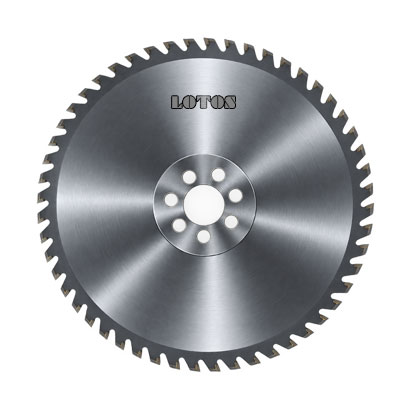
A TCT cold saw blade consists of two principal elements:
- Blade body: a high quality alloy steel plate, heat treated and precision ground to ensure flatness, tension and rigidity.
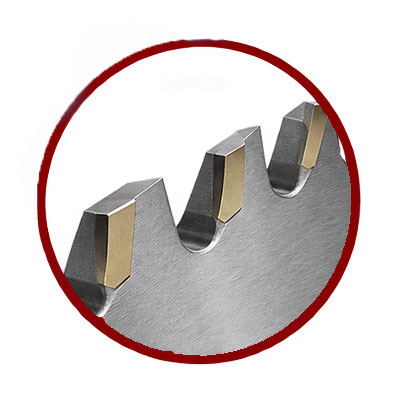
- Carbide tips: tungsten carbide inserts, brazed to the tooth seats on the blade body, which perform the actual cutting.
Technical Description :
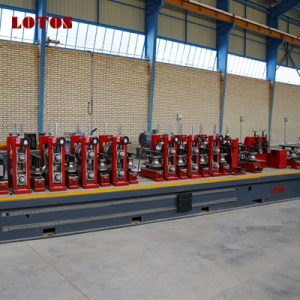
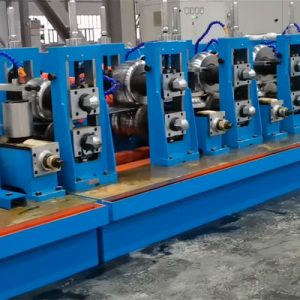
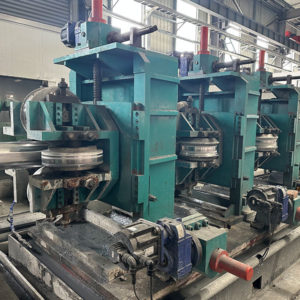
TCT cold saw blades (Tungsten Carbide Tipped cold saw blades) are precision cutting tools designed for the high speed, high accuracy cutting of steel tubes, pipes, bars, and profiles. A hardened steel body carries individually brazed tungsten carbide cutting tips. This combination gives long tool life, clean cut quality, and stable performance in continuous industrial production, such as tube mill lines, roll forming lines, and metal processing workshops.
Construction and Key Technical Features
Blade Body
The body is typically manufactured from alloy tool steel and is subjected to controlled heat treatment. Its main functions are to:
- Provide dimensional stability at high rotational speeds.
- Absorb and dampen cutting vibration.
- Maintain flatness and concentricity throughout service life.
Many bodies are fitted with expansion slots (stress-relief slots) and noise reduction features to limit thermal distortion and reduce operating noise.
Tungsten Carbide Tips
Tungsten carbide combines extreme hardness with high wear resistance. Compared with high speed steel (HSS), carbide retains its cutting edge at much higher temperatures and speeds. Tip grade, grain size and cobalt binder content are selected according to the workpiece material and cutting conditions.
Tooth Geometry
Tooth design has a direct influence on chip formation, cut quality and blade life. Common configurations include:
| Tooth Geometry | Description | Typical Application |
|---|---|---|
| Flat Top (FT) | Flat cutting face for robust, general-purpose cutting | Solid bars, thick-walled material |
| Alternate Top Bevel (ATB) | Alternating bevelled teeth for a smooth finish | Non-ferrous and thin-walled sections |
| Trapezoidal-Flat (TCG) | Alternating trapezoidal and flat teeth for effective chip breaking | Steel tubes, pipes and profiles |
For carbon steel and structural tubing, chip-breaking tooth profiles are generally preferred, as they reduce cutting forces and improve chip evacuation.
Advantages of TCT Cold Saw Blades
- Extended tool life: carbide tips resist wear far longer than HSS, which reduces blade changes and downtime.
- High cutting speed: suitable for high-throughput production, including automated and flying cut-off systems.
- Superior cut quality: clean, square, low-burr cuts reduce or eliminate secondary deburring.
- Low heat input: limited heat transfer protects material properties and dimensional accuracy.
- Cost efficiency: regrinding is possible multiple times, which lowers the cost per cut over the blade’s service life.
- Stable, repeatable performance: consistent tolerances support automated production lines.
Typical Applications
TCT cold saw blades are widely used in:
- Tube mill lines: cut off of welded round, square, and rectangular tubes.
- Roll forming lines: post-forming cutting of profiles and sections.
- Steel pipe and tube processing: carbon steel, alloy steel and stainless steel.
- Solid bar cutting: precision cutting of rods and bars.
- Automotive, construction, furniture and machinery manufacturing: where cut accuracy and production efficiency are critical.
Selection Criteria
Selecting the correct blade is essential for performance and economy. The following parameters should be defined:
- Workpiece material and hardness: carbon steel, stainless steel, alloy steel or non-ferrous metal.
- Cross-section and wall thickness: these determine the required tooth pitch and geometry.
- Blade diameter, bore size and thickness: these must match the machine specification.
- Number of teeth: thin walled tubes require a finer pitch to keep multiple teeth engaged in the cut.
- Machine type and speed: cold saw, flying saw, or fixed cut off machine; spindle speed and feed rate.
- Cooling and lubrication method: mist lubrication or flood coolant, depending on the application.
Note: As a general rule, the tooth pitch should ensure that at least two to three teeth are engaged in the workpiece at any moment of the cut.
Operating and Maintenance Recommendations
To obtain optimum blade life and cut quality:
- Ensure that the machine spindle, flanges and clamping system are clean, true and in good condition.
- Use the recommended cutting speed and feed rate for the material being cut.
- Apply an appropriate lubricant or coolant consistently.
- Avoid vibration, blade deflection, and excessive feed pressure.
- Inspect teeth regularly for chipping or wear, and regrind at the proper interval rather than running the blade to failure.
- Store blades flat or hung, in a dry environment, to prevent distortion and corrosion.
Quality and Manufacturing Considerations
The performance of a TCT cold saw blade depends on the quality of every manufacturing stage: raw material selection, precision grinding of the body, quality of the brazing joint, tip grinding accuracy, and dynamic balancing. Consistent tooth height, correct clearance angles, and a reliable braze bond are decisive factors for stable and safe operation at high speeds.
Conclusion
TCT cold saw blades provide a reliable, efficient and economical solution for modern metal cutting, particularly in tube mill and roll forming production. Correct selection of tooth geometry, blade specification and operating parameters allows manufacturers to achieve high productivity, excellent cut quality and a lower cost per cut.
For technical advice on selecting the TCT cold saw blade best suited to your production line, please contact the LotosForming technical team.
FAQ:
A cold saw blade removes most of the cutting heat through the chips, so the workpiece and the blade stay relatively cool. This produces a precise, burr-free cut with minimal heat-affected zone. Conventional abrasive or friction cutting methods generate much more heat, which can alter material properties and reduce cut quality.
Yes. TCT cold saw blades are well suited to tube mill and roll forming lines, including automated and flying cut-off systems. Their high cutting speed, long tool life and consistent cut quality support continuous production.
Yes. TCT cold saw blades can usually be reground several times, provided that sufficient carbide remains on the teeth. Regrinding at the proper interval, before the teeth become excessively worn or chipped, extends total blade life and reduces overall tooling cost.
Blades should be stored flat or hung on a suitable support, in a dry environment, to prevent distortion and corrosion. Carbide tips should be protected from impact and damage during handling.
TCT stands for Tungsten Carbide Tipped. The blade has a hardened steel body with tungsten carbide tips brazed onto each tooth. The carbide tips perform the cutting, while the steel body provides rigidity and stability.