
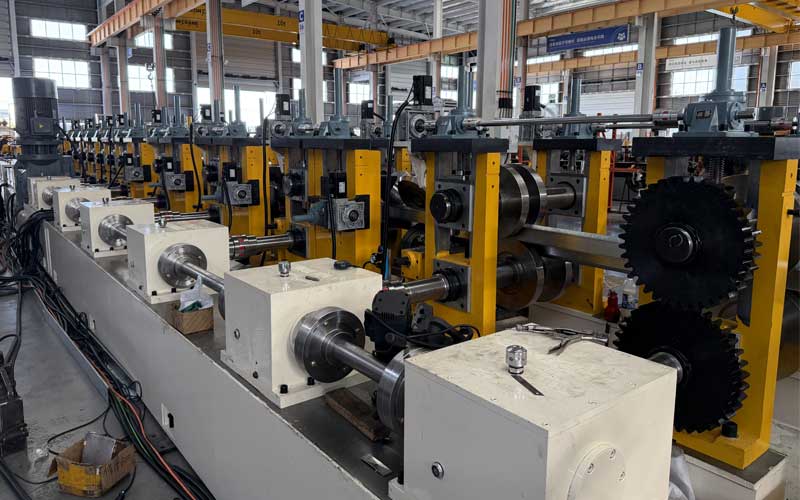
Engineering the Backbone of Photovoltaic Systems
As the global energy sector accelerates its transition toward renewable sources, the demand for reliable photovoltaic (PV) infrastructure has never been higher. While solar modules and inverters often command the majority of technical attention, the structural integrity of any PV installation depends entirely on its support framework. Solar panel structure manufacturers play a critical, non negotiable role in ensuring system longevity, operational safety, and long term return on investment.
For commercial and industrial developers, selecting the right partner for mounting systems for solar panels is a decision that influences everything from wind load resistance to lifecycle maintenance costs. Lotosforming recognizes the engineering rigor required in this domain, offering precision engineered solutions designed for demanding environments.
The Critical Function of Solar Mounting Structures
A solar mounting system is far more than a simple rack. It is a load-bearing engineering system that must perform three essential functions:
Structural Support: Withstanding dead loads (panel weight), live loads (maintenance personnel), and environmental loads (wind, snow, seismic activity).
Durability: Resisting corrosion, UV degradation, and thermal expansion over a 25+ year operational lifespan.
Optimization: Enabling proper tilt angles, row spacing, and ventilation to maximize energy yield.
Without high quality structures, even premium solar panels will underperform or fail prematurely. This is why professional developers source exclusively from certified solar panel structure manufacturers who adhere to international standards such as ISO 9001, AS/NZS 1170, and Eurocode 3.
Categories of Mounting Systems for Solar Panels
Understanding the typology of mounting solutions is essential for specification engineers. Reputable manufacturers typically offer three primary categories:
1. Roof Mounted Systems
Designed for industrial, commercial, and residential rooftops. These systems must interface safely with various roofing materials (metal deck, tile, asphalt) without compromising water tightness. Key variants include rail-based and rail-less (direct mount) designs.
2. Ground Mounted Systems
Used for utility scale and large commercial projects. These systems require deep foundations (driven piles, screw piles, or concrete ballasts) and often incorporate tracking mechanisms to follow the sun’s diurnal path. Single axis and dual-axis trackers represent the highest tier of this category.
3. Carport and Canopy Structures
Dual purpose systems that provide shaded parking while generating electricity. These require larger spans and more robust steel profiles to accommodate both PV loads and vehicle clearance requirements.
Materials and Treatments
The most respected mounting systems for solar panels share common material characteristics. Lotosforming emphasizes the following engineering specifications:
Hot-Dip Galvanized Steel (HDG): Providing superior corrosion resistance for ground mounted and coastal installations. Typical coating thickness exceeds 85 microns.
Aluminium Alloy (6063-T5 / 6005-T6): Preferred for rooftop systems due to lightweight properties and natural oxidation resistance. Aluminium eliminates galvanic corrosion risks when paired with appropriate fasteners.
Stainless Steel Fasteners (A2-304 / A4-316): Essential for clamping mechanisms and structural connections to prevent micro movements and bolt loosening.
Advanced manufacturers also offer pre assembled components and modular designs that reduce on site labor costs and installation errors.
Selection Criteria for Professional Buyers
When evaluating solar panel structure manufacturers, procurement teams should apply the following technical filters:
| Criterion | Why It Matters |
|---|---|
| Certified Load Calculations | Validates performance under extreme wind (up to 150 km/h) and snow (up to 1.5 kN/m²) scenarios. |
| Corrosion Class Compliance | C3 (urban) to C5-M (marine/coastal) ratings determine lifespan in specific environments. |
| Module Compatibility | Supports standard 60-cell, 72-cell, and emerging 120-half-cell formats with adjustable clamping zones. |
| Third-Party Testing | Reports from TÜV, UL, or JIS confirm structural fatigue resistance over simulated 25-year cycles. |
| Lead Time & Scalability | Ability to deliver 5 MW or 50 MW projects without compromising quality or tolerances. |
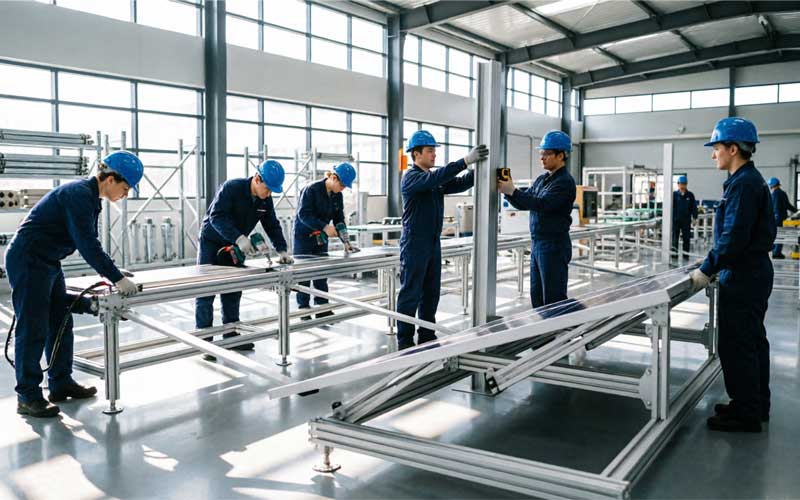
Precision in Solar Structural Manufacturing
Lotosforming brings decades of metal forming expertise to the renewable energy sector. As a dedicated manufacturer of mounting systems for solar panels, the company integrates high speed roll forming, precision punching, and automated welding to produce structures that meet the most stringent engineering requirements.
Key advantages of Lotosforming’s solar structures include:
Uniform Profile Accuracy: Roll formed rails and purlins with consistent cross-sections, eliminating assembly mismatches.
Rapid Deployment Kits: Pre-cut, pre drilled components that reduce installation time by up to 30% compared to field-fabricated alternatives.
Custom Engineering Support: Tailored solutions for non standard tilt angles, high wind zones, and difficult soil conditions.
Sustainable Manufacturing: Low waste production processes and 100% recyclable steel inputs.
Future Trends in Solar Mounting Technology
The next generation of solar panel structure manufacturers is already innovating beyond static frames. Lotosforming observes three emerging trends:
Agrivoltaic Structures: Elevated mounting systems that allow simultaneous crop cultivation and solar generation, requiring higher ground clearances (2.5 m or more).
Floating PV (FPV) Systems: Corrosion-resistant HDPE floaters combined with high-durability metal frames for reservoir and lake installations.
Digital Twin Integration: Structural models that simulate thermal expansion and wind-induced vibrations before physical production begins.
Conclusion
Selecting a qualified manufacturer for mounting systems for solar panels is a strategic investment in asset reliability. Substandard structures lead to micro-cracking in modules, increased O&M costs, and reduced energy output over time.
Lotosforming stands as a reliable partner for EPC contractors, project developers, and engineering firms seeking certified, high performance solar structures. By combining rigorous material science with precision manufacturing, the company delivers the mechanical foundation upon which profitable solar farms are built.