
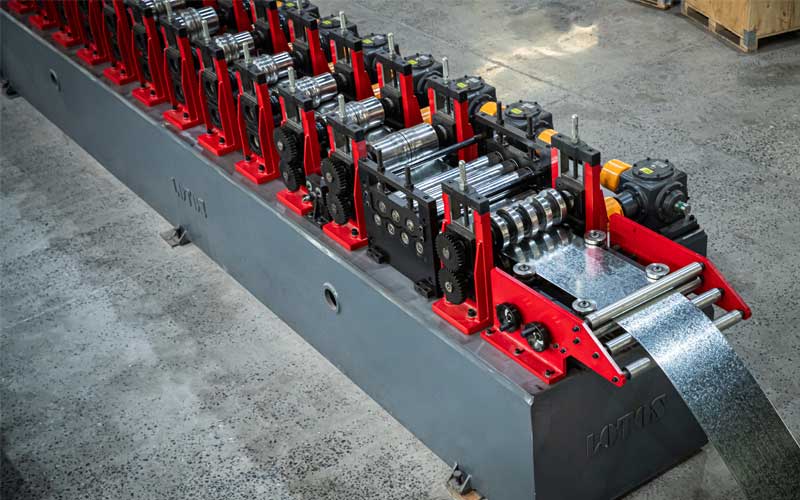
A Complete Guide to Choosing the Right Partner
Cold roll forming technology has become one of the most efficient and cost-effective methods for producing long, uniform metal profiles used across construction, automotive, storage, and infrastructure industries. As demand for high-precision metal profiles continues to grow, selecting the right cold roll forming machine manufacturer has become a critical decision for businesses aiming to scale production while maintaining quality and consistency.
This article explores what cold roll forming machines are, why manufacturer selection matters, and the key factors buyers should evaluate before investing in equipment.
What Is Cold Roll Forming?
Cold roll forming is a continuous bending operation in which a long strip of metal, typically coiled sheet steel, is passed through a series of rollers at room temperature. Each set of rollers gradually shapes the metal into the desired cross-sectional profile without applying heat. Unlike stamping or press braking, roll forming is ideal for high-volume production of long, uniform parts such as:
- Steel studs and tracks for drywall systems
- Roofing and cladding panels
- Purlins and structural sections (C, Z, and U profiles)
- Guardrails and highway safety barriers
- Cable trays and shelving components
- Door and window frame profiles
Because the process work-hardens the metal as it is shaped, roll-formed products often exhibit greater strength than their flat-sheet counterparts, all while minimizing material waste.
Why the Choice of Manufacturer Matters
Not all cold roll forming machines are built to the same standard. The performance, durability, and precision of the final product depend heavily on the engineering quality of the machine itself. A well-engineered machine translates directly into:
- Tighter tolerances and more consistent profile geometry
- Reduced downtime through robust mechanical and electrical design
- Lower long-term operating costs due to energy efficiency and reduced maintenance
- Greater production flexibility, particularly with quick-change tooling systems
Because roll forming lines are typically customized to match specific profile designs, material types, and output speeds, the manufacturer’s engineering expertise plays a decisive role in the success of the investment.
Key Factors to Evaluate When Choosing a Manufacturer
1. Engineering and Design Capability
A capable manufacturer should be able to design tooling and roller stations tailored to the customer’s exact profile specifications, rather than offering only standardized, off-the-shelf configurations. Custom engineering ensures the finished machine meets the precise dimensional and mechanical requirements of the application.
2. Build Quality and Materials
The frame, shafts, and rollers of a roll forming machine should be constructed from high grade steel and precision-machined to ensure long-term structural stability. Poor build quality often results in misalignment, vibration, and premature wear, all of which compromise product quality over time.
3. Automation and Control Systems
Modern cold roll forming lines increasingly integrate PLC-based control systems, servo-driven feeding, automatic punching, and in-line cutting for improved accuracy and reduced labor dependency. Manufacturers offering advanced automation options provide greater long-term value, particularly for high-volume operations.
4. After-Sales Support and Service
Because roll forming lines are complex mechanical and electrical systems, reliable after-sales support, including installation guidance, spare parts availability, and technical troubleshooting, is essential for minimizing downtime throughout the equipment’s operational life.
5. Industry Experience and Track Record
Manufacturers with a proven history of delivering machines across diverse industries and applications are generally better positioned to anticipate technical challenges and propose effective engineering solutions.
Common Applications of Cold Roll Forming Machines
Cold roll forming equipment serves a wide range of industrial sectors, including:
- Construction: Steel framing components, roofing panels, and structural profiles
- Automotive: Chassis rails, door reinforcement beams, and bracket components
- Storage and Racking: Shelving uprights and beam profiles
- Highway and Infrastructure: Guardrails, sign posts, and barrier systems
- HVAC and Ducting: Formed metal ducting sections
The versatility of the technology means that manufacturers must often adapt machine design to accommodate a broad spectrum of material thicknesses, widths, and mechanical properties.
Trends Shaping the Cold Roll Forming Industry
Several developments are influencing how modern cold roll forming machines are designed and manufactured:
- Increased automation to reduce labor costs and improve repeatability
- Quick-change tooling systems that allow manufacturers to switch between profile types with minimal downtime
- Energy-efficient drive systems, including servo motors that reduce power consumption compared to traditional mechanical drives
- Integration with data monitoring systems for predictive maintenance and production tracking
Buyers evaluating manufacturers should consider whether these capabilities are available, as they can significantly influence long-term productivity and return on investment.
Conclusion
Selecting the right cold roll forming machine manufacturer requires careful evaluation of engineering capability, build quality, automation options, and after-sales support. As production demands continue to evolve, partnering with a manufacturer that combines technical expertise with reliable service can make a measurable difference in production efficiency, product quality, and long-term operational costs.
Businesses exploring cold roll forming solutions are encouraged to request detailed technical consultations and compare equipment specifications carefully before making a final investment decision.
FAQ :
Cold roll forming machines can manufacture a wide range of profiles, including C and Z purlins, structural studs and tracks, solar mounting channels, strut channels, roofing panels, wall panels, door frames, cable trays, and other customized steel profiles.
A continuous roll forming process reduces manual operations and material handling. Automated feeding, forming, punching, cutting, and stacking can provide consistent production while reducing material waste and improving dimensional repeatability.
A modern cold roll forming line can include PLC control, touchscreen HMI, servo feeding, automatic punching, automatic length measurement, tracking cutting, automatic stacking, and other automated handling systems.
LOTOSFORMING provides customized cold roll forming solutions for different steel profile applications, combining roll forming technology, precision tooling, automated control systems, and technical support to meet specific production requirements.