
How to Reduce Scrap in Manufacturing
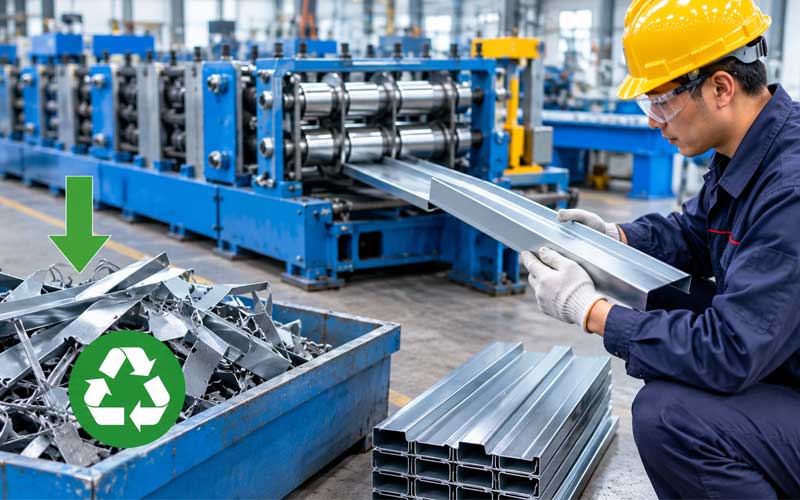
Scrap is one of the most significant hidden costs in roll forming production. In a continuous process where coil is transformed into finished profiles at high speed, even a small defect rate can translate into substantial material loss, wasted machine time, and delayed deliveries.Because raw material typically represents the largest share of the cost of a finished profile, reducing scrap directly improves profitability.
Understanding Scrap in Roll Forming
Scrap in roll forming generally falls into four categories:
- Start up and changeover scrap: Material consumed while setting up the line, threading the strip, and adjusting the forming stations.
- Process related scrap: Profiles rejected for dimensional errors, twist, bow, camber, edge wave, or surface defects.
- Cutting scrap: Waste caused by inaccurate length, poor cut quality, or end deformation.
- Material related scrap: Defects originating in the incoming coil, such as variations in thickness, yield strength, or coating quality.
Identifying which category contributes most to total losses is the first step toward effective reduction. A line that records scrap by category and by cause will improve far faster than one that records only total weight.
Principal Causes of Scrap and Their Remedies
1. Inconsistent or Poor Quality Incoming Material
The forming process assumes that the material behaves predictably. When coil properties vary, the profile varies with them.
Common issues:
- Variation in thickness within or between coils
- Inconsistent yield strength, which changes springback
- Coil set, crossbow, or edge camber
- Damaged edges or coating defects
Recommended measures:
- Specify strict tolerances for thickness, width, and mechanical properties when purchasing coil.
- Inspect incoming coils for edge condition, width, and surface quality before loading.
- Record coil batch numbers and link them to production results to identify problematic suppliers.
- Adjust forming settings when changing between coils with different yield strengths.
2. Incorrect Roller Setup and Alignment
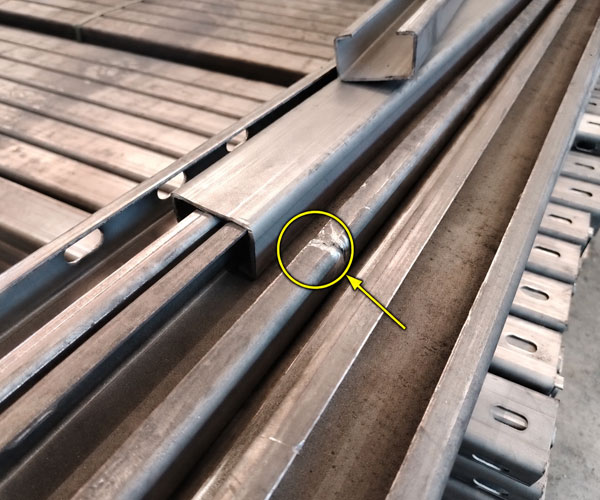
Roller setup is the most common source of process related scrap. Misaligned shafts, incorrect gaps, or uneven stand positioning produce twist, bow, and dimensional deviation.
Recommended measures:
- Verify the parallelism and level of all forming stands during installation and after any major maintenance.
- Set roller gaps according to the material thickness, using feeler gauges rather than visual estimation.
- Follow the recommended adjustment sequence from the entry stations toward the exit, rather than adjusting stations at random.
- Mark and document the correct settings for each profile so that changeovers are repeatable.
- Check the alignment of the entry guide and the exit guide, since poor guiding at the beginning of the line causes defects that cannot be corrected later.
3. Roller Wear and Surface Condition
Worn or damaged rollers lose their profile geometry and surface finish, producing dimensional drift, surface marks, and inconsistent forming.
Recommended measures:
- Use rollers made from appropriate tool steel with proper heat treatment and surface hardness for the material being processed.
- Inspect roller surfaces on a scheduled basis for scoring, pitting, and wear.
- Keep rollers clean from metal particles, coating residue, and debris that can mark the strip.
- Re-machine or replace rollers before wear reaches the point at which profile quality is affected.
- Apply suitable lubrication where required, particularly with higher strength or coated materials.
4. Twist, Bow, and Camber in the Finished Profile
These are the most frequently reported shape defects in roll forming. They result from residual stress in the strip, uneven forming, or incorrect station settings.
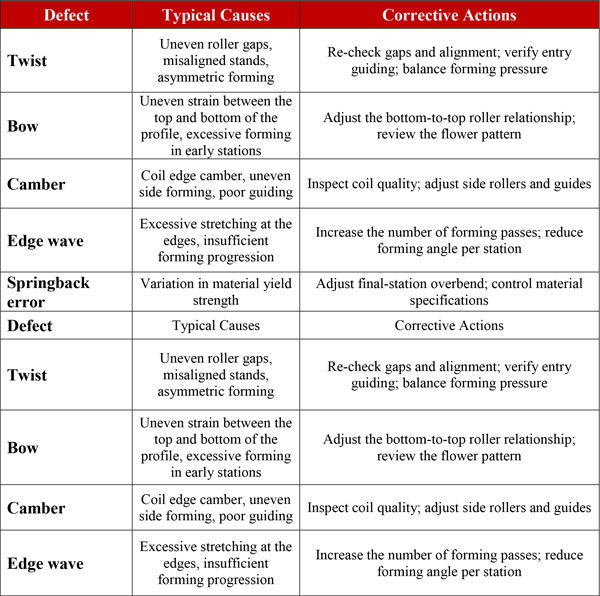
Because these defects often interact, they should be diagnosed systematically. Changing several settings simultaneously makes the cause difficult to identify.
5. Inadequate Roll Design and Flower Pattern
A well designed flower pattern distributes strain gradually across the forming stations. Poor design is a root cause of defects that no amount of adjustment can fully eliminate.
Recommended measures:
- Ensure that the number of forming stations is sufficient for the profile complexity, material thickness, and yield strength.
- Limit the forming angle per station to avoid excessive local strain.
- Provide adequate allowance for springback, particularly for high strength steel.
- Validate new designs through forming simulation or trial runs before full production.
- Work with an experienced machine manufacturer that provides roller design support for each profile.
6. Cutting Errors and Length Inaccuracy
Cutting scrap arises from inaccurate length measurement, slippage of the strip, delayed cutter response, or deformation at the cut ends.
Recommended measures:
- Use an accurate encoder installed on a measuring wheel with good contact to the profile, and keep the wheel clean and in good condition.
- Calibrate the length measuring system regularly against a reference measurement.
- Select a cutting method suitable for the profile: hydraulic stop and cut, flying shear, or flying saw, depending on line speed and profile geometry.
- Maintain cutter blades and dies, since dull or misaligned tooling causes burrs and end distortion.
- Adjust cutting parameters when changing profile thickness or material.
7. Punching and Pre Cut Errors
On lines with integrated punching, hole position errors are a frequent source of rejected parts.
Recommended measures:
- Verify encoder and servo synchronization between the punching unit and the line speed.
- Inspect punch and die clearance and condition on a regular schedule.
- Confirm the datum position of the strip so that holes remain consistent relative to the profile end.
- Test run a short sample length after any change before resuming continuous production.
8. Start Up and Changeover Losses
Every changeover consumes material. On lines that process many profile sizes, these losses can exceed process related defects.
Recommended measures:
- Standardize changeover procedures and document each step.
- Use quick change tooling or automatic width and height adjustment systems where the production mix justifies the investment.
- Store the verified settings for every profile in the PLC as a recipe so that setup does not depend on operator memory.
- Prepare tools, material, and measuring instruments before stopping the line.
- Use a short leader strip or reused scrap section for threading and initial adjustment rather than prime coil where possible.
9. Operator Training and Process Discipline
Even a well-built machine produces scrap if operators are uncertain about adjustment procedures.
Recommended measures:
- Train operators on the relationship between each adjustment and its effect on the profile.
- Provide clear work instructions, including photographs of acceptable and unacceptable profiles.
- Define inspection frequency, such as dimensional checks at start-up, after every coil change, and at regular intervals during the run.
- Encourage operators to record deviations and corrective actions.
10. Preventive Maintenance
Mechanical looseness, bearing wear, and drive irregularity produce gradual quality drift that is often detected only after scrap has accumulated.
Recommended measures:
- Lubricate bearings, gearboxes, and chains according to the manufacturer’s schedule.
- Inspect shaft run out and bearing condition periodically.
- Check hydraulic pressure, oil condition, and filter status on hydraulic systems.
- Verify the condition of couplings, drive chains, and gear mesh.
- Keep spare parts for critical wear items, such as cutter blades, bearings, and encoder components.
Using Data to Drive Scrap Reduction
Systematic measurement turns scrap reduction from a reactive task into a controlled process.
- Record scrap by cause: Categorize rejects as dimensional, surface, cutting, material, or setup related.
- Calculate scrap rate: Express it as a percentage of input coil weight for each shift, coil, and profile.
- Track by profile and coil batch: Patterns often reveal specific products or material sources responsible for losses.
- Set targets and review regularly: Define an acceptable scrap rate and review progress on a defined schedule.
- Apply root cause analysis: For recurring defects, investigate underlying causes rather than repeating the same adjustment.
Modern lines equipped with PLC recipe management, length compensation, and automatic data logging make this process considerably easier.
The Role of Machine Design in Scrap Reduction
Machine quality has a decisive influence on achievable scrap rates. The following design features contribute to consistent output:
- Rigid machine frame and stands that resist deflection under forming load
- Precision machined, properly heat-treated rollers with accurate geometry
- Accurate shaft alignment and bearing selection for long term stability
- Reliable drive system that maintains consistent speed under load
- Servo-controlled feeding, punching, and cutting for repeatable accuracy
- Adjustable entry and exit guides for stable strip positioning
- Intuitive control system with recipe storage and clear diagnostics
When purchasing or upgrading a roll forming line, these features should be evaluated alongside price and nominal capacity, since they determine the real cost of production over the life of the machine.
Conclusion
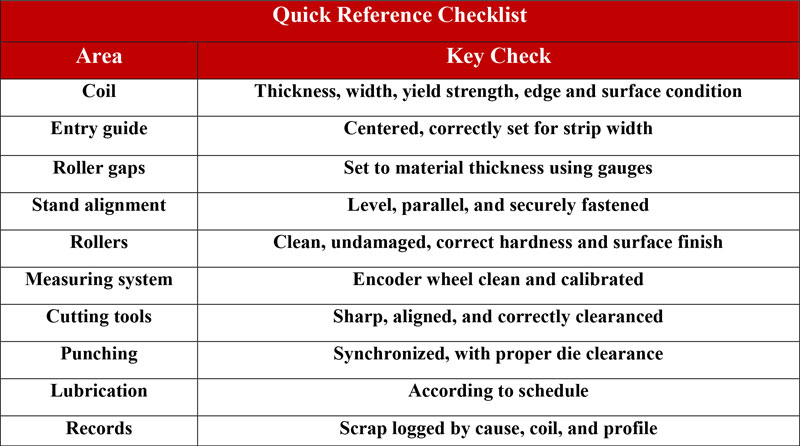
Reducing scrap on a roll forming line requires a combination of good material control, precise machine setup, well designed tooling, disciplined maintenance, and systematic data collection. No single measure resolves every problem. The most effective results are achieved when manufacturers address the root causes of defects in sequence, document verified settings, and invest in equipment designed for stable, repeatable production.
LotosForming designs and manufactures roll forming machines for a wide range of profiles, with attention to roller design, structural rigidity, and control accuracy that support low scrap rates and consistent quality. For technical consultation or a customized production line, please contact the LotosForming team.
FAQ:
Standardized procedures, stored PLC recipes, and quick-change tooling reduce the material consumed during setup and adjustment.
Inaccurate length measurement and worn cutting tools cause out-of-tolerance lengths, burrs, and end distortion that lead to rejected profiles.
A properly designed flower pattern distributes forming strain gradually, which prevents defects that machine adjustment alone cannot correct.
Rollers and tooling should be inspected on a regular schedule and re-machined or replaced before wear affects profile quality.
Recording scrap by cause, coil batch, and profile reveals recurring problems and allows corrective action to target the root cause.