
CU Solar Channel Making Machine
Replacing the mould in a CU Solar Channel Line is one of the most critical maintenance and production operations in modern solar mounting manufacturing. With the increasing demand for customized photovoltaic (PV) support systems, manufacturers require production lines capable of changing profiles quickly while maintaining high accuracy and productivity.
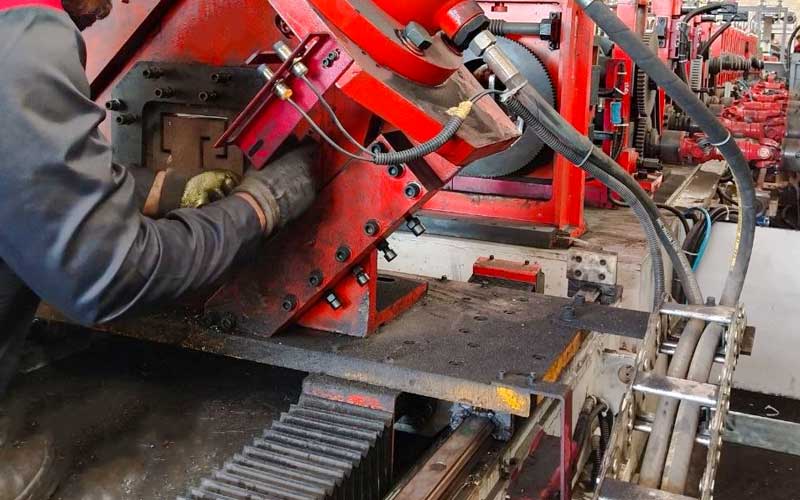
Modern Fully Automatic Solar Panel Production Lines equipped with quick-change technology significantly reduce downtime by allowing operators to replace only the punching and cutting moulds while keeping the roll forming section unchanged. This approach improves production efficiency, lowers operating costs, and enables rapid switching between different CU solar channel specifications.
What Is a CU Solar Channel Line?
A CU Solar Channel Roll Forming Line is a fully automated manufacturing system designed to produce structural channels used in photovoltaic mounting systems.
The production line generally consists of:
- Hydraulic Decoiler
- Coil Leveling Machine
- Servo Feeding System
- Hydraulic Punching Machine
- Roll Forming Machine
- Servo Tracking Cutting System
- Automatic Discharge Table
- PLC Control System
Unlike traditional production lines that require changing the complete roll tooling, advanced quick change systems only require mould replacement in the punching and cutting stations.
Why Mould Replacement Is Important
Solar mounting projects often require different:
- Hole patterns
- Slot positions
- Mounting dimensions
- Channel lengths
- End cutting shapes
Instead of purchasing multiple production lines, manufacturers simply replace the punching and cutting moulds to produce different CU solar channel designs.
Benefits include:
- Reduced production downtime
- Lower tooling costs
- Faster order switching
- Improved production flexibility
- Higher equipment utilization
Which Moulds Need to Be Replaced?
One of the major advantages of LOTOSFORMING’s Fully Automatic Solar Panel Production Line is that the roll forming rollers remain unchanged.
Only two tooling sections require replacement:
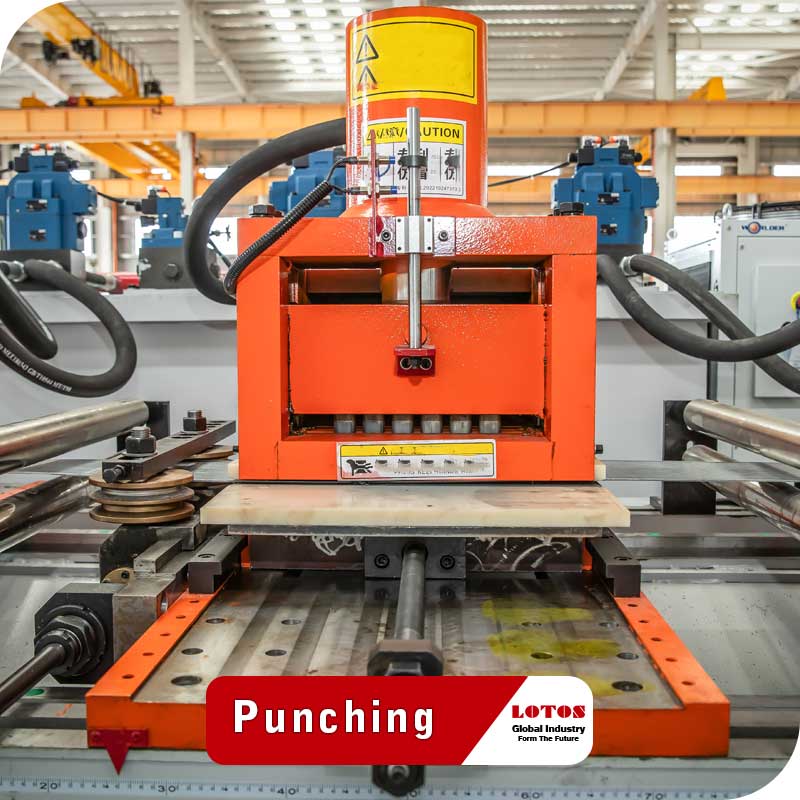
1. Punching Mould
The hydraulic punching die determines:
- Hole diameter
- Slot dimensions
- Hole spacing
- Hole quantity
- Hole layout
When producing another CU profile, operators only replace the punching die set.
Typical Punching Operations
- Round holes
- Long slots
- Oval holes
- Mounting holes
- Drain holes
- Special customer-designed holes
The servo feeding system automatically positions the material according to the new punching program.
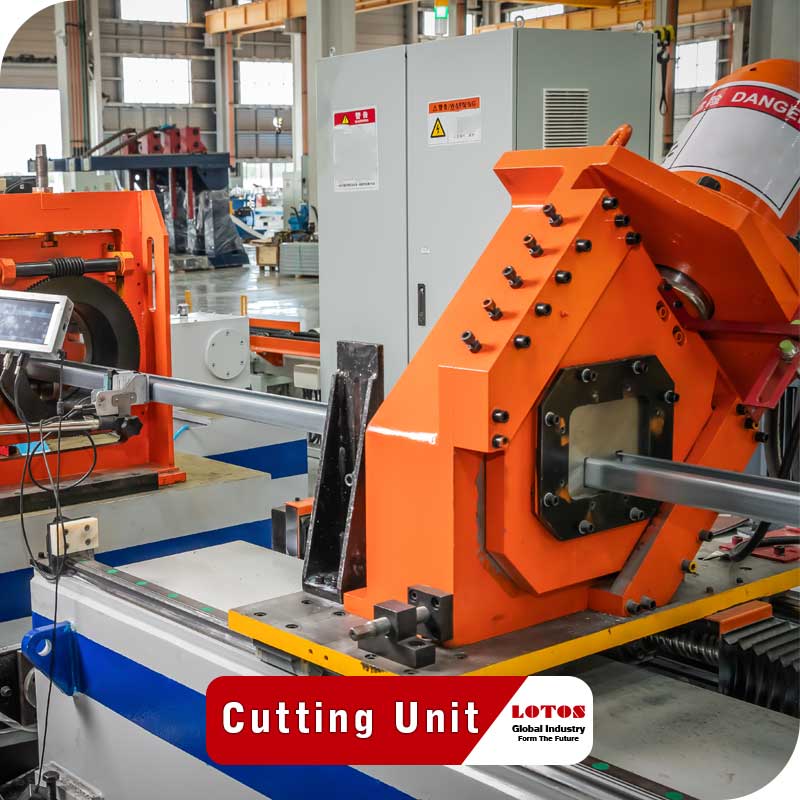
2. Cutting Mould
The cutting die is replaced when changing:
- Product width
- End profile
- Cutting angle
- Special edge geometry
The hydraulic flying cutting system continues cutting without stopping the roll forming process, maintaining high production speed.
Components That Do NOT Require Replacement
During profile conversion, the following equipment remains unchanged:
- Hydraulic decoiler
- Straightener
- Servo feeder
- Roll forming machine
- Transmission system
- PLC controller
- Hydraulic power unit
- Electrical cabinet
This significantly shortens the setup time.
Step by Step Mould Replacement Procedure
Step 1 – Stop the Production Line
- Stop automatic production.
- Empty the remaining material.
- Turn off the hydraulic system.
- Lock the machine following safety procedures.
Step 2 – Remove the Existing Punching Die
The operator:
- Disconnects hydraulic connections if required.
- Removes fixing bolts.
- Lifts the punch die using lifting equipment.
- Cleans the mounting surface.
Proper cleaning prevents installation errors.
Step 3 – Install the New Punching Mould
Install the new punching die by:
- Positioning the mould accurately
- Tightening fixing bolts
- Checking alignment
- Connecting hydraulic components
- Performing manual test strokes
Accurate alignment ensures punching precision.
Step 4 – Replace the Cutting Die
The cutting mould replacement follows similar procedures:
- Remove the existing cutting die
- Clean the mounting base
- Install the new die
- Tighten all fasteners
- Verify cutting clearance
- Perform trial cutting
Step 5 – Update PLC Parameters
After mechanical replacement, update the PLC with:
- Product length
- Punch sequence
- Hole spacing
- Servo feed distance
- Cutting timing
- Production quantity
The servo system automatically synchronizes feeding and punching.
Step 6 – Perform Trial Production
Before mass production:
- Produce several sample pieces.
- Measure hole positions.
- Check cutting quality.
- Verify profile dimensions.
- Inspect surface finish.
Once the samples meet specifications, normal production can begin.
Typical Time Required for Mould Replacement
Modern quick-change CU Solar Channel Lines greatly reduce setup time.
Typical mould replacement time:
| Operation | Typical Time |
|---|---|
| Punching mould replacement | 15–25 minutes |
| Cutting mould replacement | 10–20 minutes |
| PLC parameter adjustment | 5–10 minutes |
| Trial production | 10–15 minutes |
| Total changeover time | 40–70 minutes |
Compared with conventional roll forming systems, this represents a significant reduction in downtime.
Advantages of Quick Mould Replacement
A quick change system provides numerous production benefits:
Higher Productivity
Less downtime results in increased daily output.
Lower Production Cost
Only the punching and cutting moulds are changed, eliminating the need for replacing expensive roll forming rollers.
Greater Manufacturing Flexibility
Manufacturers can efficiently produce multiple CU solar channel specifications on a single production line.
Improved Product Accuracy
Servo controlled feeding and precision moulds ensure consistent hole positioning and cutting accuracy.
Faster Customer Response
Rapid changeovers enable manufacturers to fulfill small-batch and customized orders with minimal delay.
Safety Considerations
When replacing moulds, operators should always:
- Disconnect electrical power.
- Release hydraulic pressure.
- Wear appropriate personal protective equipment (PPE).
- Use certified lifting devices for heavy tooling.
- Verify die alignment before restarting the machine.
- Conduct a trial run before full production.
Following proper safety procedures helps prevent equipment damage and workplace accidents.
Why Choose LOTOSFORMING?
LOTOSFORMING designs Fully Automatic Solar Panel Production Lines with advanced quick-change technology to maximize production efficiency.
Key features include:
- High-speed servo feeding
- Precision hydraulic punching
- Quick-change punching and cutting moulds
- Servo flying cutting system
- PLC automatic control
- Stable and accurate roll forming
- Low maintenance requirements
- Suitable for continuous industrial production
These features allow manufacturers to produce high-quality CU solar channels with fast profile changeovers and minimal downtime.
Conclusion
Replacing the mould in a CU Solar Channel Line is a straightforward process when using a modern quick-change production system. By changing only the punching and cutting moulds while retaining the roll forming section, manufacturers can significantly reduce setup time, improve production flexibility, and lower operating costs.
For companies producing a variety of photovoltaic mounting profiles, a Fully Automatic Solar Panel Production Line with quick mould replacement technology provides an efficient, accurate, and cost effective solution for meeting diverse market demands.